To win victory over evil - Tewantin
Notes
Transcript
Anglican Church Noosa
March 3, 2024
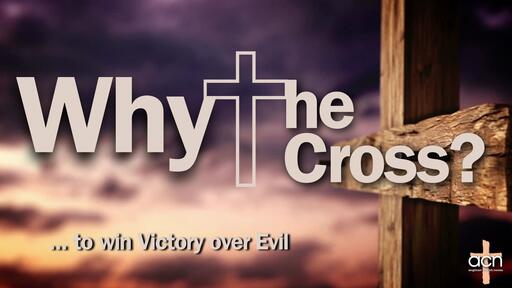
Why the Cross? to win Victory over evil
Genesis 3:8-15; Colossians 2:9-15; John12:25-33
Rev’d Lynda Johnson
Don’t we love a storyline of good vs evil.
right vs wrong. baddie vs goodie.
It’s a basic and solid storyline, and it’s what makes a lot of good movies good. It’s what makes a
lot of good books, good. We want to see evil dealt with and ultimately defeated.
When we see it in a movie, or hear about it in life and across the world, there’s that great sense of
justice, isn’t there? There is joy, and there is freedom.
Think of how we still react internally, when we are reminded again of the end of WWII, and what
that meant.
The nal defeat of the Nazis brought great rejoicing around the world.
This solid plot line of good vs evil shapes humanity, because it impacts humanity so much.
The reality and presence of evil in this world, is known by us all.
We see it playing out today - in terrible persecution, in autocracies, in unjust invasions, in terrorist
activities, in horrendous situations of domestic violence and cruelty, in heartless criminal activity,
as well as in our individual sel shness that we see every day.
The plot line of good vs evil shapes humanity.
But do we realise that this basic plot line is actually the story of the Bible.
Ever since evil won, and sin became default for us in this world, it was God’s plan to deal with evil,
to deal with sin, in a resolute way.
Genesis 3 outlines the problem but also gives us a hint of what is to come, and points us to the
end.
God says to Satan ….
I will put enmity between you and the woman,
and between your offspring and hers;
he will crush your head,
and you will strike his heel.”
From the beginning there is good vs evil, and there will be a reckoning.
This facet of the Atonement we are looking at today has a theological name - Christus Victor.
What this means is that on the cross, Jesus achieved something that had been needed since the
beginning, and that is - the defeat of Satan, evil, sin and death.
Christus Victor, means ultimate victory.
Jesus defeated Satan. He put him to shame on the cross.
Jesus defeated death. No longer does death reign over the children of God because of the cross.
And Jesus defeated sin on the cross. Now while Christians do still sin, we are no longer under the
power of sin.
fi
fi
Page 1 of 4
Jesus dealt with and removed these enemies of his people.
And this is something to be celebrated and remembered.
Let’s look at some Bible verses …
1 John 3:8 says 'The one who does what is sinful is of the devil, because the devil has been
winning from the beginning. The reason the Son of God appeared was to destroy the devil’s
works.'
John 12:31-32 says 'Now is the time for judgement on this world; now the prince of this world will
be driven out. And I, when I am lifted up from the earth, will draw all people to myself.'
Colossians 2:15 says 'And having disarmed the powers and authorities, he made a public
spectacle of them, triumphing over them by the cross.'
Ephesians 6:12 says 'For our struggle is not against esh and blood, but against the rulers,
against the authorities, against the power of this dark world and against the spiritual forces of evil
in the heavenly realms.
Hebrews 2:14-15 says 'Since the children have esh and blood, he too shared in their humanity
so that by his death he might break the power of him who holds the power of death—that is, the
devil—and free those who all their lives were held in slavery by their fear of death.
Christ defeated Satan through his perfect obedience, resisting temptation, and going through
death without failing ….. in either faith or obedience.
We’re in the season of Lent - a time of 40 days leading to Easter.
The 40 days reminds us of a couple of things - the 40 years of the Hebrews wandering in the
desert after the great rescue event of the exodus. And the 40 days of Jesus being in the
wilderness, fasting and praying in preparation for ministry, being tempted by Satan, and resisting
all the way.
And how did Jesus resist those temptations? By using the scriptures. He quoted Scripture to
speak into the very offers of temptation that Satan was delivering.
But Satan didn’t learn his lesson at that time.
The devil thought Christ would fail. But he didn’t!
He triumphed, showing that he was indeed, the Son of God.
Christ’s work also defeated death.
1 Corinthians 15:56-57 says the sting of death is sin, and the power of sin is the law, but thanks be
to God! He gives us the victory through our Lord Jesus Christ.
Let’s look at a basic outline of what the Gospel of John says …
John begins his Gospel with reference to the Word, through whom the world was created and in
whom there is life—and this Word became esh: Jesus of Nazareth.
The other gospels take a little more time to reveal who Jesus is, but not the Gospel of John.
Jesus’ work was to make God known, and his signs reveal God’s glory.
He provides food and drink, he restores the sick and raises the dead.
In his own words, Jesus says he is the one who embodies and offers eternal life. He is the bread
that gives life to the world (ch 6), He is the light that shows the way to the Father (chs 8&9), He is
the shepherd who protects the sheep (ch10), he is the one in whom there is resurrection from the
dead (ch11).
So to believe in Jesus, to trust him, is to have the kind of life that he brings.
fl
fl
fl
Page 2 of 4
He is shown to be the solution to the human predicament.
And the Gospel of John shows us that the predicament is that human beings are in darkness.
In the gospel of John, unbelief is the epitome of sin, and in this sin and unbelief, human beings are
captive, unable to free themselves, and are subject to death.
But the Son, Jesus, can set them free. Jesus speaks, and they live.
Jesus reveals the glory of God, the love of God for the world, love that will go to death to bring life
to the dead and bring light into darkness.
In our reading today from John 12, Jesus talks about being a servant, and that his followers must
also be servants.
He speaks of judgement saying, in v.31 ’Now is the time for judgement on this world, now the
prince of this world will be driven out.
v.33 He said this to show the kind of death he was going to die.
The prince of this world is Satan, and Jesus knew that his death was going to deal with evil, and
defeat it.
Let’s look now at a basic outline of what the Apostle Paul says …
In Ephesians and Colossians Paul speaks of the “forgiveness of sins” (Eph 1:17; Col 1:14) and in
1 Corinthians and Galatians he speaks of the death of Christ “for our sins” (1 Cor 15:3; Gal 1:4).
But one of the particularly striking features of how Paul presents the human dilemma is that he
tends to speak not of “sins” in the plural, but of “sin” in the singular.
He personi es sin as a power.
He says this a lot in the letter to the Romans. People are under the power of sin (Rom 3:9; 1 Cor
15:56; Gal 3:22); sin has power over them (Rom 5:21; 6:12, 14) and dwells in them (Rom 7:17, 20,
23); they are enslaved to it (Rom 6:6–7, 16-18, 20; 7:14) or are simply “under sin” (Rom 7:14). And
sin leads to death (Rom 5:12, 21; 6:23; 8:2).
And because of this (being captive, being enslaved), human beings need a deliverer, we need a
saviour, someone who can break that power of sin, who can “set us free from the law of sin and
death” (Rom 8:2).
Our reading from Colossians is a powerful one. But look at other verses in Colossians that
highlight Christ’s work on the cross.
Colossians 1:13-14 says ‘he has rescued us from the dominion of darkness and brought us into
the kingdom of the Son he loves, in whom we have redemption, the forgiveness of sins.
And in Colossians 2 Paul describes it like this: When you were dead in your sins and in the
uncircumcision of your esh, God made you alive with Christ. He forgave us all our sins, having
cancelled the charge of our legal indebtedness, which stood against us and condemned us; he
has taken it away, nailing it to the cross. And having disarmed the powers and authorities, he
made a public spectacle of them, triumphing over them by the cross.
This is such an important aspect of the amazing multi-faceted jewel which is Jesus’ work on the
Cross.
And we need to rediscover it.
fl
fi
Page 3 of 4
But the truth is, that we are frail and broken people who struggle.
For those of us who have submitted ourselves to Jesus as Lord, for those of us who are
Christians, yes we know we are on the winning side, but life is still a struggle isn’t it?
We need to rediscover what it means that Jesus has won the victory. We need to reacquaint
ourselves with Christus Victor.
I mentioned earlier at the hint we get in Genesis after the debacle of the Fall, where God places
Adam and Eve in the restrictive life outside the garden, and gives Satan a warning.
I will put enmity between you and the woman,
and between your offspring and hers;
he will crush your head,
and you will strike his heel.”
This is recognised as an allusion to the spiritual battle which will be in play until the end. The
offspring of Eve refers ultimately to the coming of the great rescuer, the Messiah, the Christ,
Jesus. And the altercations which will continuously happen, the enmity, will come down to one
crushing battle where Satan’s head will be crushed.
And Paul refers to that when he says that the powers and authorities will be disarmed.
Back in 2004 Mel Gibson, as notorious as he was, produced and directed a magni cent yet horri c
lm, the Passion of the Christ. It came out of his devout Catholic faith and he was able to use his
fame to get this story as visible as I believe it could be.
I want to show you part of the Gethsemane scene - where the ful lment of Genesis 3 is creatively
presented. The words said as Adam and Eve were expelled from the garden, are brought to life as
Jesus willingly goes into this other garden, the garden of Gethsemane, to face the horror of this
approaching battle.
Gethsemane scene from the Passion of the Christ…
In a sermon given in late 1939, Dietrich Bonhoeffer, the great German pastor and martyr,
preached on "Christus Victor".
I nish with a quote from him ….
"In our lives we don't speak readily of victory. It is too big a word for us. We have suffered too
many defeats in our lives; victory has been thwarted again and again by too many weak hours, too
many gross sins. But isn't it true that the spirit within us yearns for this word, for the nal victory
over the sin and anxious fear of death in our lives? And now God's word also says nothing to us
about victory; it doesn't promise us that we will be victorious over sin and death from now on, on
our own; rather, it says with all its might that someone has won this victory and that this person, if
we have Him as Lord, will also win the victory over us and for us. It is not we who are victorious,
but Jesus."
fi
fi
fi
fi
Page 4 of 4
fi
fi
Over the 20th century I believe there was a growing tide of triumphalism in the Christian church
that, I think, has left people lost and disillusioned. It was all about - 'I can live the victorious life; the
bible calls me to be victorious, because Jesus has triumphed.'
