Unveiled and Transformed

Notes
Transcript
12 Therefore, since we have such hope, we use great boldness of speech—
13 unlike Moses, who put a veil over his face so that the children of Israel could not look steadily at the end of what was passing away.
14 But their minds were blinded. For until this day the same veil remains unlifted in the reading of the Old Testament, because the veil is taken away in Christ.
15 But even to this day, when Moses is read, a veil lies on their heart.
16 Nevertheless when one turns to the Lord, the veil is taken away.
17 Now the Lord is the Spirit; and where the Spirit of the Lord is, there is liberty.
18 But we all, with unveiled face, beholding as in a mirror the glory of the Lord, are being transformed into the same image from glory to glory, just as by the Spirit of the Lord.
1 Therefore, since we have this ministry, as we have received mercy, we do not lose heart.
2 But we have renounced the hidden things of shame, not walking in craftiness nor handling the word of God deceitfully, but by manifestation of the truth commending ourselves to every man’s conscience in the sight of God.
Unveiled and Transformed
Unveiled and Transformed
Have you ever gone into a funhouse at a fair or amusement park? I’m thinking of places with all those mirrors that change your appearance. Some make you look tall and skinny - that’s my favorite one. Others make you look very short and chunky. Some distort your appearance so that you don’t even recognize yourself because of how they transform how you see yourself. Every angle, every mirror you try, shows you a skewed image, and they never reveal your authentic appearance.
If you try to live this way, you never see your true self because your vision is filtered through a distorted perspective. Spiritually, many people feel this way. They see their experiences and ask themselves, “Why do they continue facing difficulties? Why don’t I see the transformation that I want?
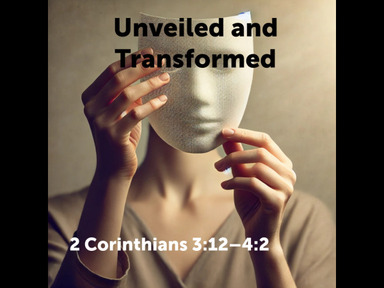
To avoid confronting reality, we often wear masks to hide our true selves.
Have you ever come to church, smiled, exchanged handshakes or hugs, and said, “I’m doing great!” But, deep down within you were feeling anything but great on the inside. You hide your struggles, your doubts, and your fears because you don’t want anyone to see what’s really going on.
It’s exhausting.
Thinking about this reminds me of the movie The Mask, which stars Jim Carey as Stanley Ipkiss, representing a man lacking confidence and visibility. He finds this magical mask, and his entire world transforms when he puts it on. He becomes bold, confident, and seemingly unstoppable. But here’s the problem. The mask only hides who he is and doesn’t transform him. Once he removes the mask, he is still the insecure person he always was.
Isn’t this the way we often confront life? We believe that by putting on the right “mask”—the right job title, perfect image, and reputation that we will experience a transformation. The transformation seen in the movie proves to be short-lived. It’s not real.
But here’s the good news: God doesn’t work that way.
The Holy Spirit works from within to transform us instead of covering us up like with a mask we wear. He doesn’t simply hide our flaws but restores us. Our transformation through Him leads us toward becoming more Christ-like rather than creating an artificial self.
Paul discusses this transformation process in his letter as recorded in 2 Corinthians 3:12–4:2. The world offers masks—temporary, surface-level change. The Spirit provides true transformation that endures.
So today, I want to ask: Is your life defined by masks that hide your true self, or does a deep transformation through the Spirit define it? As the veil falls away and the Spirit works within you, not only will you see Jesus, but you will begin to mirror Him.
Let’s dive into God’s Word and see how He takes us “from glory to glory.”
The Veil Removed: Boldness in Christ (3:12–16)
The Veil Removed: Boldness in Christ (3:12–16)
2 Corinthians 3:12 “Therefore, since we have such hope, we use great boldness of speech—”
Paul begins this section with this powerful truth: The boldness we experience comes from our hope in Christ. Not hesitant, not fearful—bold. In all honesty, people don’t automatically possess boldness as a natural trait.
Many Christians experience difficulty maintaining this strong confidence in their faith. We hesitate to:
Pray boldly because we question whether God actually hears us.
Share Jesus openly because they fear judgment from others.
Respond to God’s calling because we doubt ourselves and our abilities.
Picture a little child standing on the edge of a pool. Her father stands in the pool with his arms outstretched as he shouts to her, “Jump!” I’ve got you!” She wants to get into the water, but she hesitates. What if she falls wrong? What if the water is too deep? What if her father doesn’t catch her?
But then, she looks into his eyes. She remembers every time he has been there for her and supported her through different times. She trusts him. And with a deep breath—she jumps.
This demonstrates exactly the boldness Paul describes. Our boldness originates from the nature of God rather than our own qualities. Our confidence in Christ empowers us to act with courageous faith and releases doubt from our life.
Paul makes a distinction between the old covenant and the new covenant. The old covenant didn’t allow people to approach God with boldness. The new covenant invites us to Hebrews 4:16 “Let us therefore come boldly to the throne of grace, that we may obtain mercy and find grace to help in time of need.” The law exposed their sin but left their guilt intact. People couldn’t demonstrate boldness because they lacked assurance. Through Christ, the new covenant delivers enduring hope that remains constant.
The writer of Hebrews 4:16 encourages believers to approach God confidently because of what Jesus has done for them. Let’s break it down in a humane and relatable manner:
1. “Let us therefore come boldly…”
The term “boldly” does not imply arrogance or recklessness. It means to be confident, without anxiety or fear. Picture a child racing into their parent’s arms—they don’t stop to wonder if they’re welcome; they just go, knowing they’re loved.
Many people find it intimidating to approach God. Maybe because of guilt, shame, or a sense of not being “good enough.” But the writer of Hebrews says, “Do not be terrified. Come to God confidently since you belong here.
2. “…to the throne of grace…”
In ancient times, a throne symbolizes power, judgment, and authority. If you approached a king’s throne, you had to exercise extreme caution—one false move could cost you your life.
God’s throne is not a throne of judgment for believers in Christ. It is a throne of grace. When we go to God’s throne we don’t find rejection, we find open arms. Instead of condemnation, we get compassion.
3. “…that we may obtain mercy and find grace to help in time of need.”
Mercy means not receiving the punishment we deserve.
Grace is obtaining blessings that we do not deserve. It’s a concept that should fill us with gratitude and a sense of wonder.
God provides both when we approach Him. When we’re struggling, weak, or in need, we don’t have to earn His assistance; He freely gives it. So, let’s remember, we can approach God confidently, knowing that His throne is a throne of grace, and that we will find mercy and grace to help us in our time of need.
2 Corinthians 3:14 “14 But their minds were blinded. For until this day the same veil remains unlifted in the reading of the Old Testament, because the veil is taken away in Christ.”
Paul explains that Israel could not understand God’s majesty and glory because they were hidden behind a veil. The veil represents spiritual blindness as people attempt to follow religious laws and rituals without having a personal relationship with God.
This happens today, too. Many attempt to receive God’s favor by striving to be “good enough,” practicing religious rules or fulfilling spiritual rituals. Without the Spirit, you face spiritual blindness akin to reading in the dark, where truth appears as shadows, but clarity remains unreachable.
Imagine a wedding. The bride walks down the aisle with a beautiful veil covering her face. Expectation begins to build for the special moment when the groom lifts the veil and they see each other face-to-face—fully, clearly, with nothing in between.
What if she never lifted the veil? What if she wore it to the reception, the honeymoon, and every day of their marriage? There would always be something in the way, a thin but persistent barrier that kept them from genuinely seeing and interacting with one another.
It seems weird, right? Marriage is supposed to be an intimate, honest, fully accessible relationship. But when we let spiritual “veils”—such as doubt, anxiety, or pride—to linger, this is exactly what results. They prevent us from really enjoying the fullness of God’s presence.
When we turn to Jesus, the veil is lifted, allowing us to see and know Him for who He truly is.
That’s what Paul is talking about here. A spiritual veil remained over the hearts of the Israelites. Although the Israelites understood God and adhered to His commandments, they failed to have a true vision of Him. They were unable to experience full transformation because they did not see Him.
2 Corinthians 3:16 “16 Nevertheless when one turns to the Lord, the veil is taken away.”
This is the good news: the veil can be removed! Not by working harder. Not by following more rules. The veil is removed when people turn to Jesus. The moment we surrender to Him causes barriers to vanish while allowing us to begin seeing God’s glory.
What’s Veiling Your Vision?
Perhaps your vision toward God remains obscured by a veil today. It might be:
Pride—thinking you can do life on your own.
Sin—letting distractions pull you away from God.
Fear—worrying about what surrendering to Jesus will cost you.
But here’s the promise: When we turn to Jesus, the Spirit lifts the veil that obscures our vision. He wants us to see clearly so that we can walk boldly and live in freedom.
What bold faith action does God want you to take today?
Transformed by the Spirit: From Glory to Glory (3:17–18)
Transformed by the Spirit: From Glory to Glory (3:17–18)
So we looked at the point that turning to Christ takes away the veil that separates us from God. The separation between us and God has been removed because we have turned to Christ, which allows us to approach Him boldly. But what happens next? After we turn to Christ, God does not leave us as we were. No! When we remove the veil, transformation truly starts.
The transformation is like cleaning your glasses because your vision used to appear blurry and out of focus because of fingerprints and smudges on the lens. The moment we clean the lens, we gain clear sight. As we see Jesus clearly, we start to reflect His nature.
2 Corinthians 3:17 “17 Now the Lord is the Spirit; and where the Spirit of the Lord is, there is liberty.”
Paul teaches that finding true freedom requires receiving God’s Spirit. But what kind of freedom is it?
It is freedom from sin. The Holy Spirit dismantles sin’s control over our lives. Our past no longer controls us like a slave master.
It is freedom from trying harder. Life no longer requires exhausting attempts to prove our worth or seek righteousness.
It is freedom to grow more and more like Christ. The Holy Spirit transforms our lives through forgiveness so we can experience God’s grace completely.
Imagine a prisoner who has endured many years confined within a pitch-black cell. He finds his freedom when the doors open wide one day. He’s told that he is free to go, he’s served his sentence, and he can go. He doesn’t leave the cell but stays because that cell represents the only life he has ever experienced.
That is what happens when we don’t walk in the freedom that the Holy Spirit gives us. We fail to live in that freedom when we stay trapped in old patterns. Individuals who receive forgiveness sometimes remain trapped by feelings of guilt and shame or trying to earn God’s love. True freedom involves leaving the cell and embracing life in the light of divine grace.
2 Corinthians 3:18 “18 But we all, with unveiled face, beholding as in a mirror the glory of the Lord, are being transformed into the same image from glory to glory, just as by the Spirit of the Lord.”
This is the heart of transformation! The removal of the veil allows us to see God’s glory. The Spirit initiates transformation from within when we look upon Him.
It’s a moment in time. That moment when we fully surrender and consecrate our lives to Jesus. We are sanctified.
It’s a process: The scripture describes our transformation as a continuous “glory to glory” process.
It’s the Spirit’s work: Transformation relies on the work of the Spirit inside us rather than on our efforts to try harder.
It happens as we see Jesus: Our reflection of Him increases as we direct our attention toward Him.
Think about the moon. The moon’s light happens as it reflects sunlight without generating its brightness. Its brightness increases as it turns toward the sun.
It’s the same with us. Our reflection of Jesus grows stronger when we focus on Him. The Holy Spirit works within us to mold our thoughts, words, and actions after Christ’s example.
Are We Letting the Spirit Transform Us?
This transformation isn’t automatic. We have to behold Christ by actively
Reading Scripture—Filling our minds with His truth.
Prayer—Letting the Spirit work in our hearts.
Worship—Fixing our eyes on His glory.
Do you allow the Spirit to work His transformative power on you every day? Do you continue to live as if you remain inside prison even after set free?
God wants to take us from glory to glory.
The question is:
Are we letting Him?
Living the Transformation: A Ministry Without Masks (4:1–2)
Living the Transformation: A Ministry Without Masks (4:1–2)
The veil is removed through the Holy Spirit’s work so we can see Christ without barriers. Our transformation through Christ progresses from one stage of glory to the next. This transformation extends beyond ourselves and aims to reshape our daily existence and service while showing Christ to others.
It’s one thing to say, “The Spirit is transforming me.” But the real question is: Does the transformation people experience through the Holy Spirit become evident in their everyday actions? According to Paul, genuine transformation by God enables us to live with boldness, authenticity, and integrity.
2 Corinthians 4:1 “Therefore, since we have this ministry, as we have received mercy, we do not lose heart.”
Paul had every reason to quit. Paul endured continuous persecution while facing relentless rejection and suffering. Despite his challenges, Paul maintains that “We do not lose heart.” God’s mercy supplied his strength because he could not draw strength from his own resources.
We receive power from God’s mercy instead of our own capabilities. Paul would have exhausted himself if he had depended on his own energy. His reliance on God’s transformation allowed him to continue progressing despite difficult situations.
Imagine going on a long road trip. Driving with an empty gas tank will prevent you from reaching your destination. People who attempt to sustain their Christian life through their strength will eventually experience burnout.
Paul understood his strength and endurance came from God’s transformative mercy. His endurance remained strong because he drew strength from God instead of himself.
Have you depleted your inner strength? If so, you’re attempting to do it on your own. The Holy Spirit urges us to experience transformation.
2 Corinthians 4:2 “2 But we have renounced the hidden things of shame, not walking in craftiness nor handling the word of God deceitfully, but by manifestation of the truth commending ourselves to every man’s conscience in the sight of God.”
Paul expressly explains that real life requires transformation by the Holy Spirit.
The world teaches us to hide our true selves in order to win praise and say the right things. Paul expresses his opinion by declaring, “We refuse to do that.”
He refused to make God’s Word more appealing to people. He refused to play religious games. He dedicated his life to truthful living and ethical preaching, presenting the gospel without alteration or deception.. He wouldn’t play religious games. He dedicated his life to truthful living and ethical preaching, which presented the gospel without any modifications or deceit.
What is the meaning behind “practice cunning” or “tamper with God’s Word”?
“We refuse to practice cunning…”
Cunning describes using deceptive language and manipulation to gain support instead of sharing honest information.
During Paul’s era, false teachers manipulated their teachings by making them more palatable or introducing additional rules for their benefit.
The practice resembles a salesperson who exaggerates a product’s features beyond reality. The product sounds incredible in its description; however, upon receipt, you discover you were fooled. Paul explains that they never manipulate the gospel message.
“…or to tamper with God’s Word.”
Tampering involves making unauthorized changes to something, which results in its diversion from its intended purpose.
During Paul’s era, some religious teachers diluted the gospel for popular appeal, and others imposed additional religious burdens for control.
When strong medicine gets watered down, it may become more palatable but ineffective at healing. Tampering with God’s Word makes it easier to accept but removes the liberating truth.
Have you purchased online based on an attractive picture only to receive a cheap and defective product? The item that appeared beautiful was made of thin plastic.
That’s how some people experience Christianity today. The hypocrisy they find contrasts their expectation for authenticity because people claim transformation without practicing it.
Paul is challenging us:
What Paul questions is whether we genuinely represent Christ or whether we continue to disguise ourselves behind masks.
Do we focus on gaining the approval of others instead of maintaining truthfulness before God?
Do we present a façade to the world or live in transparency?
Our public spiritual persona appears flawless, yet we battle with our struggles behind closed doors.
Do we alter our belief system to match the desires of those around us?
Does our life reflect real transformation, or are we simply performing religious rituals?
Paul’s message is clear: True transformation isn’t a performance—it’s real. Through the guidance of the Holy Spirit, people can maintain an existence based on integrity while embracing truthfulness and transparency.
What about you? Does your faith reflect your true self, or are you hiding behind a façade?
Our calling from God demands that we discard our facades to live with boldness and authenticity so others can witness His Spirit within us.
Unveiled and Transformed
Unveiled and Transformed
We’ve seen how the Holy Spirit removes the veil, how He transforms us from glory to glory, and how true transformation leads to authentic living.
Paul’s message is clear: God doesn’t want us wearing masks—He wants us living in truth.
We can come boldly to God because the veil has been removed.
We are being transformed daily by His Spirit as we behold Christ.
We are called to live authentically, refusing to manipulate or distort God’s Word.
So, the question is: Are you living unveiled?
Are you allowing the Spirit to transform you, or are you holding on to the past?
Are you living in truth, or are you still wearing a mask?
God invites us to step into the light, embrace transformation, and live boldly for Him.
Will you let the Spirit do His transforming work in you today?
