Beware of False Prophets and Wolves in Sheep’s Clothing
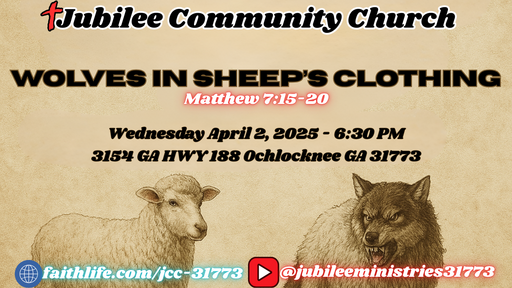
The Warnings of Jesus: A Study of His Hard Teachings • Sermon • Submitted • Presented • 53:36
0 ratings
· 25 viewsFiles
Notes
Transcript
Beware of False Prophets and Wolves in Sheep’s Clothing
Beware of False Prophets and Wolves in Sheep’s Clothing
Wednesday Night Bible Study – Session 4
Wednesday Night Bible Study – Session 4
Series: The Warnings of Jesus: A Study of His Hard Teachings
Date: April 2, 2025
Introduction
Introduction
Tonight, we continue in Jesus’ Sermon on the Mount, where He gives a clear and critical warning about false prophets who look like sheep but are inwardly wolves.
Why This Study Matters
In the last days, deception will increase—and false teachers will lead many astray.
Jesus does not suggest this is possible; He declares it will happen.
The goal of this session is to help us:
Recognize what a false prophet is.
Understand how to test teaching and fruit.
Know how to stand on the truth and avoid deception.
Key Passage: Matthew 7:15-20
This teaching follows Jesus’ warning about the narrow and broad way and preceded His warning about false professions of faith.
The flow of this section reveals: False teachers lead people down the broad path to destruction while giving them a false sense of security.
Part I: The Appearance of False Prophets (Matthew 7:15)
Part I: The Appearance of False Prophets (Matthew 7:15)
15 Beware of false prophets, which come to you in sheep’s clothing, but inwardly they are ravening wolves.
1. What is a False Prophet?
1. What is a False Prophet?
In Scripture, a false prophet is someone who claims to speak for God but leads people away from truth.
They may be smooth, charismatic, and influential, but their message is corrupt.
Parallel Scriptures:
Jeremiah 23:16-17 – False prophets preach peace and prosperity while ignoring sin.
Ezekiel 13:10 – They build weak walls and cover them with untempered mortar—superficial truth that cannot stand.
2 Peter 2:1-3 – They bring in damnable heresies and make merchandise of people.
2. Wolves in Sheep’s Clothing
2. Wolves in Sheep’s Clothing
These teachers look like God’s people.
They may use Scripture, wear religious titles, or claim spiritual gifts.
Their goal is destruction, not edification.
Jesus calls them ravening (devouring) wolves—they feed on the flock.
Application: False prophets are not always obvious. They look safe, but their teaching destroys souls.
Part II: You Shall Know Them by Their Fruits (Matthew 7:16-20)
Part II: You Shall Know Them by Their Fruits (Matthew 7:16-20)
16 Ye shall know them by their fruits. Do men gather grapes of thorns, or figs of thistles?
1. Fruit Is the Evidence of the Root
1. Fruit Is the Evidence of the Root
A person’s life, doctrine, and influence will reveal their true character.
Good fruit = sound doctrine, holy living, selfless service.
Bad fruit = twisted truth, worldly compromise, pride, and exploitation.
Parallel Scriptures:
Galatians 5:19-23 – Works of the flesh vs. fruit of the Spirit.
James 3:11-12 – A fountain cannot bring forth both bitter and sweet water.
1 John 4:1 – “Try the spirits whether they are of God: because many false prophets are gone out into the world.”
2. Bad Trees Will Be Cut Down and Burned
2. Bad Trees Will Be Cut Down and Burned
19 Every tree that bringeth not forth good fruit is hewn down, and cast into the fire.
Jesus is not simply warning against bad doctrine—He’s warning of eternal judgment.
A teacher who leads others into destruction will face the same fate.
Application: Don’t be fooled by charisma, crowds, or success—fruit is tested by truth, not popularity.
Part III: Identifying False Teaching in Our Day
Part III: Identifying False Teaching in Our Day
1. They Preach a Different Gospel
1. They Preach a Different Gospel
A gospel that avoids repentance, promises worldly prosperity, or encourages lawlessness is not the Gospel of Christ.
Galatians 1:6-9 – Paul warns against any gospel that deviates from Christ’s message, even if it’s delivered by an angel.
2. They Appeal to the Flesh
2. They Appeal to the Flesh
False teachers avoid hard truths and preach what people want to hear.
2 Timothy 4:3-4 (KJV): “They shall heap to themselves teachers, having itching ears.”
3. They Deny the Lordship of Christ
3. They Deny the Lordship of Christ
They may talk about “blessings,” “favor,” or “destiny,” but avoid submission, holiness, and obedience.
Jude 4 – False teachers turn grace into lasciviousness and deny the Lord who bought them.
Application: We must test everything by the Word of God. If it doesn’t line up with Scripture, it is to be rejected.
Part IV: Guarding Ourselves Against Deception
Part IV: Guarding Ourselves Against Deception
Know the Word of God Deeply
Psalm 119:11 (KJV): “Thy word have I hid in mine heart, that I might not sin against thee.”
The best way to recognize falsehood is to know the truth.
Stay Full of the Holy Spirit
The Spirit leads us into all truth (John 16:13).
A Spirit-filled believer will have discernment when something is off in teaching or practice.
Submit to Godly Accountability
God places true shepherds to protect the flock (Ephesians 4:11-14).
We need biblically faithful community and leadership.
Watch the Fruit and the Foundation
What is being produced in the lives of those under their teaching?
Is it Christ-centered holiness, or self-centered living?
Conclusion and Closing Prayer
Conclusion and Closing Prayer
Summary of Key Truths
False prophets appear righteous but are inwardly dangerous.
They will be known by their fruits—true doctrine, righteous living, and Spirit-led influence.
Jesus warns that these teachers are leading people to destruction.
We must be vigilant, discerning, and grounded in the Word.
Final Call to Discernment and Vigilance
Am I following sound doctrine, or being swayed by what feels good?
Am I able to discern truth from error based on Scripture?
Do I judge fruit based on God's standard or the world’s?
Pray for the Church to be awakened and strengthened in sound doctrine.
Next Session: The Cost of Discipleship
Next Session: The Cost of Discipleship
What does it truly cost to follow Jesus?
Why does Jesus say we must “hate father and mother” and “take up our cross” to be His disciple (Luke 14:25-33)?
What separates a true disciple from a crowd follower?
