No One Left Behind

Notes
Transcript
Introduction:
This is a challenging passage. I’m going to exposit it as best I can
13 Is anyone among you suffering? He should pray. Is anyone cheerful? He should sing praises. 14 Is anyone among you sick? He should call for the elders of the church, and they are to pray over him, anointing him with oil in the name of the Lord. 15 The prayer of faith will save the sick person, and the Lord will raise him up; if he has committed sins, he will be forgiven. 16 Therefore, confess your sins to one another and pray for one another, so that you may be healed. The prayer of a righteous person is very powerful in its effect. 17 Elijah was a human being as we are, and he prayed earnestly that it would not rain, and for three years and six months it did not rain on the land. 18 Then he prayed again, and the sky gave rain and the land produced its fruit.
PRAY
13 Is anyone among you suffering? He should pray. Is anyone cheerful? He should sing praises.
Essentially a call for a life of prayer:
Times of suffering and times of cheerfulness point us to God.
Suffering? Pray to God for yourself
Cheerful? no suffering? Sing to God in gratitude.
2 unhealthy responses:
Bear your own burdens
Forget God in good times, failing to thank Him.
14 Is anyone among you sick? He should call for the elders of the church, and they are to pray over him, anointing him with oil in the name of the Lord.
Call the Shepherds of the church
Pipernotes, if a sheep is hurt, who is most likely to provide the care? The shepherd. God has appointed elders with the specific task, and gifting, to provide the spiritual care needed.
It is a provision of the Lord.
28 Be on guard for yourselves and for all the flock of which the Holy Spirit has appointed you as overseers, to shepherd the church of God, which he purchased with his own blood.
Be on guard for yourselves and for all the flock of which the Holy Spirit has appointed you as overseers, to shepherd the church of God,[g] which he purchased with his own blood.
2 Shepherd God’s flock among you, not overseeing out of compulsion but willingly, as God would have you; not out of greed for money but eagerly;
2 Shepherd God’s flock among you, not overseeing[a] out of compulsion but willingly, as God would have you;
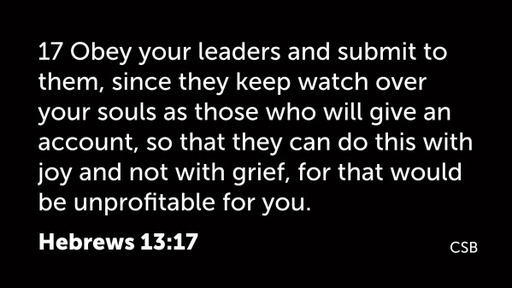
17 Obey your leaders and submit to them, since they keep watch over your souls as those who will give an account, so that they can do this with joy and not with grief, for that would be unprofitable for you.
Obey your leaders[f] and submit to them, since they keep watch over your souls as those who will give an account, so that they can do this with joy and not with grief, for that would be unprofitable for you.
Spiritual care requires trustto the point that elders be granted a level of spiritual authority over you in similar way a doctor is granted physical authority over you.
13 Is anyone among you suffering? He should pray. Is anyone cheerful? He should sing praises. 14 Is anyone among you sick? He should call for the elders of the church, and they are to pray over him, anointing him with oil in the name of the Lord. 15 The prayer of faith will save the sick person, and the Lord will raise him up; if he has committed sins, he will be forgiven. 16 Therefore, confess your sins to one another and pray for one another, so that you may be healed. The prayer of a righteous person is very powerful in its effect. 17 Elijah was a human being as we are, and he prayed earnestly that it would not rain, and for three years and six months it did not rain on the land. 18 Then he prayed again, and the sky gave rain and the land produced its fruit.
“…they are to pray over him, anointing him with oil in the name of the Lord.”
The two-fold role of “anointing oil" I see in James’ teaching among the many uses of olive oil in life of Jewish people:
First, passages referring to medicinal uses such as Isaiah 1:6 that speaks of wounds “cleansed, bandaged, or soothed with oil.”
That’s the way it was used in Jesus’ parable of the Good Samaritan (Luke 10:34), when the Samaritan bandaged and anointed the beaten man’s wounds.
It’s unlikely James is talking literally about soothing open wounds needing dressing.
Instead, the action is…
1. symbolically anointing the “wounded” (sick person) with the healing ointment of God by praying for healing and wholeness.
Secondly, other passages refer to setting something or someone apart for God’s use:
· Kings: Saul (1 Sam. 10:1), David (1 Sam 16:13), Solomon (1 Kings 1:39)
· Priests: Aaron (Leviticus 8:12)
· To Honor: Mary Madgelene to Jesus (Luke 7:46)
· Offerings Objects, and Spaces
So, the second purpose would be…
2. Symbolically setting the person apart for the Lord’s special attention as they pray
Bottom line,
Why is this important? God says it is. It is the avenue God tells us He may often provide healing.
It signifies you believe that God can heal and it is a step of faith when you go about it God’s way.
But let’s be clear: elders and oil don’t guarantee healing.
It’s not a magic potion administered by magic people that binds God to respond in healing.
13 Is anyone among you suffering? He should pray. Is anyone cheerful? He should sing praises. 14 Is anyone among you sick? He should call for the elders of the church, and they are to pray over him, anointing him with oil in the name of the Lord. 15 The prayer of faith will save the sick person, and the Lord will raise him up; if he has committed sins, he will be forgiven. 16 Therefore, confess your sins to one another and pray for one another, so that you may be healed. The prayer of a righteous person is very powerful in its effect. 17 Elijah was a human being as we are, and he prayed earnestly that it would not rain, and for three years and six months it did not rain on the land. 18 Then he prayed again, and the sky gave rain and the land produced its fruit.
A Key phrase: “In the name of the Lord.”
Refers to the prayer offered under Christ's authority and power for healing what is in alignment with His will and character.
NOTE: Jesus didn’t heal everyone!
ILLUS:
1. John 9 – Pool of Bethesda – only 1 from many (more on this later)
2. Paul’s thorn in the flesh though he fervently prayed - 2 Corinthians 12:6-10)
3. Joni Ericksen Tada – God had greater plan.
she has had exponentially more impact on the world because she hasn’t been healed.
Here’s where it gets tricky to interpret:
15a The prayer of faith will save the sick person, and the Lord will raise him up;
I’ve been saying that there’s no guarantee Jesus will heal.
But James is speaking here in an absolute way.
“The prayer of faith willsave the sick person, and the Lord will raise him up;”
So, according to James, THIS “prayer of faith” WILL result in healing.
What is this "Prayer of faith” – My current understanding:
What I think it is NOT: Not general faith that God CAN heal.
If I bring up a sick person..
If I asked if you think God CAN heal – probably all would say yes.
If I asked if you think God WILL heal – might be much less.
We KNOW God doesn’t heal everyone, no matter how much they are being prayed for.
What I think it IS:
Special occasions where God’s instructions have been followed and He gives a special measure of faith as a gift to at least one of those who are praying for the sick person so they KNOW that it IS His will to heal and they are able to pray a prayer of faith that is extraordinary and the result will be healing. Through this, the Body is edified.
It’s tricky not only because it’s hard to know if my interpretation is exactly right, but also to understand how the next verse fits in with this:
James says, “if he has committed sin it will be forgiven.”
How does that fit in with physical healing?
Most obvious way is to conclude that some sin (NOT ALL) leads to illness.
There’s biblical evidence for that:
Pool of Bethesda –
John 5:1-15 is the account of Jesus healing the lame man at the pool of Bethesda. After healing the man, he said to him, “Go and sin no more”. That implies that sin had something to do with this man’s illness – we don’t know what. It’s more clear in (14) when Jesus found the man in the temple and said to him, “See, you are well. Do not sin anymore, so that something worse doesn’t happen to you.”
Communion: 1 Corinthians 11:27-30
27 So, then, whoever eats the bread or drinks the cup of the Lord in an unworthy manner will be guilty of sin against the body and blood of the Lord. 28 Let a person examine himself; in this way let him eat the bread and drink from the cup. 29 For whoever eats and drinks without recognizing the body, eats and drinks judgment on himself. 30 This is why many are sick and ill among you, and many have fallen asleep.
If this is what James is referring to, it gives strength to the importance of confessing our sin to one another.
13 Is anyone among you suffering? He should pray. Is anyone cheerful? He should sing praises. 14 Is anyone among you sick? He should call for the elders of the church, and they are to pray over him, anointing him with oil in the name of the Lord. 15 The prayer of faith will save the sick person, and the Lord will raise him up; if he has committed sins, he will be forgiven. 16 Therefore, confess your sins to one another and pray for one another, so that you may be healed. The prayer of a righteous person is very powerful in its effect. 17 Elijah was a human being as we are, and he prayed earnestly that it would not rain, and for three years and six months it did not rain on the land. 18 Then he prayed again, and the sky gave rain and the land produced its fruit.
Verse 16 says, “THEREFORE, confess your sins to one another and pray for one another, so that you may be healed.”
Now, the sickness doesn’t have to be physical.
Practicing sin can lead to bad consequences, spiritually and also physical manifestations. In those cases, confession can lead to better outcomes.
ILLUS: Someone with some kind of addiction might have physical as well as spiritual illness. In those cases, we need the same process James lays out to experience healing.
Either way, I wonder if we would see more physical and spiritual healing if we decide to take sin more seriously?
Makes sense: Why is God going to take serious our call for healing, if we don’t take serious His call to stop rebelling?
This is important because James then says, (16b), “The prayer of a righteous person is very powerful in its effect.”
I don’t think that’s just talking about elders, and I don’t think that’s talking about a perfect person.
Who among us is righteous? No one. We’re only righteous in Christ:
Since we’re not righteous in ourselves, it must refer to someone who is in right relationship with the Lord.
That comes through walking with the Lord through His Word and confessing our sins regularly.
Galatians 5:16 – “walk in the Spirit…”
1 John 1:9 – If we confess our sin, he will cleanse and forgive.
We can’t do that alone. Must be in community.
Conclusion
Do you believe what James is saying? He finishes by using an example the people would have been very familiar with. Elijah was a “super prophet” among the Jews. James brings perspective in (17-18):
Elijah was a human being as we are, and he prayed earnestly that it would not rain, and for three years and six months it did not rain on the land. 18 Then he prayed again, and the sky gave rain and the land produced its fruit.
Two take-aways:
1. We need to take sin more seriously.
The oil symbolizes being set apart. The act of being set apart (Holy) FOR God means that it is set apart FROM sin (unholiness).
Confessing our sin to one another in community has at least 3 effects:
1. It builds unity and trust with each other. Confession is hard and risky but rewarding.
2. It blesses the community and builds faith in God as He includes the community in the process and they get to experience the work of God together.
3. God gets maximum glory. God chooses to use means to bring Himself the most glory. Most often, that’s His church. God is glorified when His people come together and call on His name, confessing He is there only hope.
2. We need take prayer more seriously
Frankly, I don’t think we’ve taken prayer that seriously.
I believe we are too often satisfied with “safe” praying: Tossing up a prayer to heal someone “if it’s your will,” without the intense “asking, seeking, and knocking” that is often required in prayer.
If we become serious, it means we believe that what James says is true and that God has a reason for having him communicate this to the Church.
a. We pray obediently – we make sure we’re clean before the Lord, submissive to his will
b. We pray earnestly/fervently – there is an intensity about it.
b. We pray expectantly – we believe God CAN answer
c. We pray boldy – calling on God TO answer
d. We pray humbly – We are prepared to receive what He gives us, fully dependent on His wisdom.
