Joseph - Faith Through Every Season
Notes
Transcript
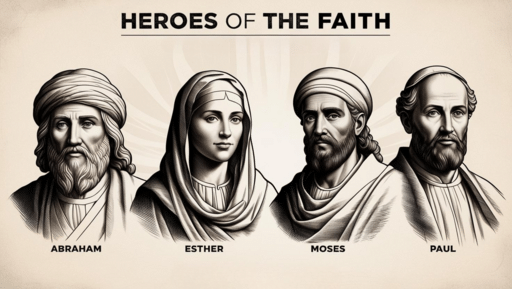
Good morning, everyone. It's wonderful to see each of you here today as we continue our series called "Heroes of the Faith." Over the past few weeks, we've been looking at men and women in the Bible who lived by faith and were used by God to change the world. Today, we're going to dive into one of the most incredible and encouraging stories in all of Scripture - the story of Joseph.
Now, when I say Joseph, I'm not talking about Mary's husband who helped raise Jesus. I'm talking about Joseph from the Old Testament, the one with the colorful coat. His story is found in the book of Genesis, and it spans several chapters because it's such a rich and detailed account of how God works in someone's life.
Joseph's story is amazing because it shows us what it looks like to maintain faith in God through every possible circumstance life can throw at you. Think about it - Joseph experienced family favoritism, jealousy, betrayal, slavery, false accusations, imprisonment, and then sudden promotion to the second most powerful position in Egypt. That's quite a roller coaster, isn't it?
But here's what makes Joseph's story so powerful for us today. Through every single one of these experiences, both good and bad, Joseph held onto his faith in God. He believed that God had a plan for his life, even when that plan seemed impossible to understand.
The big idea I want us to grab hold of today is this: We need to embrace a faith that holds on to God's promises, believing that every circumstance, whether good or bad, is a vital part of His loving plan for our lives.
That's a challenging truth, isn't it? It's easy to believe God has a plan when things are going well. But what about when your brothers sell you into slavery? What about when you're falsely accused and thrown into prison? What about when years pass and it seems like God has forgotten about you?
Joseph's story teaches us that real faith isn't just believing in God when life is easy. Real faith is trusting that God is working His plan even when we can't see how all the pieces fit together.
Let's start at the beginning of Joseph's story. Joseph was the eleventh of twelve sons born to a man named Jacob. Now, Jacob had four wives - it's a complicated family situation that we don't have time to get into today - but the important thing to know is that Joseph was the son of Rachel, who was Jacob's favorite wife.
3 Now Israel loved Joseph more than his other sons because Joseph was a son born to him in his old age, and he made a long-sleeved robe for him. 4 When his brothers saw that their father loved him more than all his brothers, they hated him and could not bring themselves to speak peaceably to him.
Right from the start, we see that Joseph is in a difficult family situation. His father clearly favors him over his other sons, and this favoritism creates serious problems. Joseph gets this special coat - some translations call it a coat of many colors, others call it a richly ornamented robe. Either way, it was a visible sign that Joseph was his father's favorite.
Now, you might think that being the favorite child would be a blessing, but in Joseph's case, it created tremendous jealousy and hatred among his brothers. They couldn't even speak to him peacefully. Imagine living in a house where ten of your brothers hate you so much they won't even talk to you nicely.
But then something happens that makes the situation even worse. Joseph starts having dreams, and these aren't ordinary dreams. These are dreams from God that reveal His plan for Joseph's future.
5 Then Joseph had a dream. When he told it to his brothers, they hated him even more. 6 He said to them, “Listen to this dream I had: 7 There we were, binding sheaves of grain in the field. Suddenly my sheaf stood up, and your sheaves gathered around it and bowed down to my sheaf.”
He also had a dream that the sun, moon, and eleven stars bowed down to him. This was an obvious reference to Joseph’s parents and eleven brothers. Now, we need to understand something important here. These dreams weren't Joseph's imagination running wild. These were revelations from God about His plan for Joseph's future. God was showing Joseph that one day he would be in a position of authority, and his family would come to him for help.
But here's the thing - Joseph was probably seventeen years old when he had these dreams. He was young and perhaps not very wise about how to handle this information. Instead of keeping the dreams to himself or sharing them only with his father, Joseph tells his brothers about them.
Can you imagine how that went over? Here's this teenager, already the favorite son, now telling his older brothers that he had dreams where they were bowing down to him. It's like pouring gasoline on a fire. The hatred Joseph's brothers felt toward him eventually boiled over into action. One day, when Joseph was sent to check on his brothers who were tending their father's flocks, they decided they had had enough.
18 They saw him in the distance, and before he had reached them, they plotted to kill him. 19 They said to one another, “Oh, look, here comes that dream expert! 20 So now, come on, let’s kill him and throw him into one of the pits. We can say that a vicious animal ate him. Then we’ll see what becomes of his dreams!”
Think about this for a moment. These are Joseph's own brothers, his own flesh and blood, and they're plotting to murder him. The betrayal runs deep - deeper than we might initially realize. These brothers had grown up with Joseph. They had shared meals with him, played with him as children, and lived under the same roof. But their jealousy and hatred had grown so strong that they were willing to kill him.
Fortunately, Reuben, the oldest brother convinced them not to kill Joseph directly. Instead, they threw him into a pit. But then, when some merchants came by, most of the brothers decided to sell Joseph as a slave.
28 When Midianite traders passed by, his brothers pulled Joseph out of the pit and sold him for twenty pieces of silver to the Ishmaelites, who took Joseph to Egypt.
Twenty pieces of silver. That's what Joseph's brothers thought his life was worth. It's heartbreaking to think about - sold into slavery by his own family for the price of a slave.
But here's where we need to pay close attention to how God works. This betrayal, as terrible as it was, became the very thing that put Joseph exactly where God needed him to be. Egypt was where Joseph would eventually rise to power and be in position to save not only his family but thousands of other people from a devastating famine.
The brothers thought they were getting rid of the dreamer and his dreams. They probably thought they were taking control of their own destiny. But in reality, they were serving God's purposes without even knowing it. God took their evil intentions and wove them into His good plan.
This is one of the most important truths we can learn from Joseph's story. Romans 8:28 tells us that "all things work together for the good of those who love God, who are called according to his purpose." This doesn't mean that all things are good - betrayal by your family is never good. But it does mean that God can take even the worst things that happen to us and use them for His purposes.
When we face betrayal in our own lives - whether it's from family, friends, or people we trusted - we can remember Joseph's story. The pain is real, and the hurt runs deep. But God is bigger than human betrayal, and He can use even our deepest wounds to accomplish His purposes in our lives.
Joseph's journey from the pit to Egypt was just the beginning of his testing. When he arrived in Egypt, he was sold to a man named Potiphar, who was an officer of Pharaoh and captain of the guard. Now, you might think that being a slave would be the worst thing that could happen to someone, but Joseph's attitude and character began to shine even in this difficult situation.
2 The Lord was with Joseph, and he became a successful man, serving in the household of his Egyptian master. 3 When his master saw that the Lord was with him and that the Lord made everything he did successful, 4 Joseph found favor with his master and became his personal attendant. Potiphar also put him in charge of his household and placed all that he owned under his authority.
This is amazing. Even as a slave, Joseph didn't become bitter or give up on life. Instead, he worked with such integrity and skill that his master noticed. The Bible tells us that "the Lord was with Joseph," and His presence was evident in everything Joseph did.
But here's where the story takes another difficult turn. Potiphar's wife noticed Joseph too, but not in a good way.
7 After some time his master’s wife looked longingly at Joseph and said, “Sleep with me.” 8 But he refused. “Look,” he said to his master’s wife, “with me here my master does not concern himself with anything in his house, and he has put all that he owns under my authority. 9 No one in this house is greater than I am. He has withheld nothing from me except you, because you are his wife. So how could I do this immense evil, and how could I sin against God?” 10 Although she spoke to Joseph day after day, he refused to go to bed with her.
Here we see Joseph facing a different kind of test. This wasn't about outside circumstances he couldn't control. This was about choices he had to make. Potiphar's wife was persistent in her advances, and Joseph had to make a decision every single day about how he would respond.
Notice Joseph's reasoning. He doesn't just say "no" because he might get caught. He doesn't refuse simply because it would be wrong to betray his master's trust, though that was certainly part of it. Joseph's ultimate reason for refusing was that it would be a sin against God.
This shows us something important about Joseph's character. Even in Egypt, surrounded by people who didn't worship the God of Abraham, Isaac, and Jacob, Joseph maintained his faith and his moral standards. He understood that his actions weren't just about human relationships - they were about his relationship with God.
But Potiphar's wife wouldn't take no for an answer. One day, when the house was empty, she grabbed Joseph's garment and demanded that he sleep with her. Joseph literally ran away, leaving his garment in her hands.
13 When she saw that he had left his garment with her and had run outside, 14 she called her household servants. “Look,” she said to them, “my husband brought a Hebrew man to make fools of us. He came to me so he could sleep with me, and I screamed as loud as I could. 15 When he heard me screaming for help, he left his garment beside me and ran outside.”
So Potiphar's wife lied. She took Joseph's garment and used it as evidence to support a false accusation. She claimed that Joseph had tried to attack her, when the truth was exactly the opposite.
19 When his master heard the story his wife told him—“These are the things your slave did to me”—he was furious 20 and had him thrown into prison, where the king’s prisoners were confined. So Joseph was there in prison.
Once again, Joseph faced injustice. He had done the right thing, he had maintained his integrity, and yet he was punished for it. From a human perspective, this seems completely unfair. Joseph could have given in to temptation and probably continued to live comfortably in Potiphar's house. Instead, he chose to honor God, and it seemed to cost him everything.
But notice what the Bible says next:
21 But the Lord was with Joseph and extended kindness to him. He granted him favor with the prison warden.
Even in prison, God was with Joseph. This is one of the most encouraging truths in the entire Bible. God doesn't abandon us when we face consequences for doing the right thing. His presence goes with us into every situation, even the most difficult ones.
Joseph's time in prison might have seemed like the end of his story, but God was still working His plan. Even in prison, Joseph's character continued to shine.
22 The warden put all the prisoners who were in the prison under Joseph’s authority, and he was responsible for everything that was done there. 23 The warden did not bother with anything under Joseph’s authority, because the Lord was with him, and the Lord made everything that he did successful.
This is almost unbelievable. Joseph went from being a slave in Potiphar's house to being a prisoner in Pharaoh's jail, but in both places, he ended up in positions of responsibility and trust. This wasn't because Joseph was trying to climb the ladder of success. It was because his character was so evident that people naturally trusted him.
While Joseph was in prison, two other prisoners arrived - Pharaoh's cupbearer and his baker. They both made Pharoah angry and were thrown in prison with Joseph. While in prison, both men had dreams that troubled them, and Joseph was able to interpret their dreams through God's wisdom.
8 “We had dreams,” they said to him, “but there is no one to interpret them.” Then Joseph said to them, “Don’t interpretations belong to God? Tell me your dreams.”
Notice Joseph's response. He doesn't claim to have special powers or magical abilities. He clearly states that interpretations belong to God. This shows us that Joseph understood his gifts came from God, and he wanted to make sure God received the credit.
Joseph interpreted both dreams accurately. The cupbearer was restored to his position, just as Joseph predicted. The baker was executed, also just as Joseph predicted. Before the cupbearer left prison, Joseph asked him to remember him and speak to Pharaoh about his case.
Genesis 40:14-15 "But when all goes well for you, remember me and show kindness to me. Mention me to Pharaoh and get me out of this prison. For I was kidnapped from the land of the Hebrews, and even here I have done nothing that they should have put me in this dungeon."
This request seems reasonable. Joseph had helped the cupbearer understand his dream and had given him hope during a difficult time. Surely the cupbearer would remember this kindness and help Joseph in return.
But Genesis 40:23 tells us:
23 Yet the chief cupbearer did not remember Joseph; he forgot him.
Two more years passed. Two more years of prison for a crime Joseph didn't commit. Two more years of waiting for justice that seemed like it would never come. This is where many of us might have given up on God. We might have concluded that faith doesn't work, that God doesn't care, or that we're better off looking out for ourselves.
But Joseph continued to trust God's plan, even when he couldn't see how it would work out. And then, suddenly, everything changed.
1 At the end of two years Pharaoh had a dream: He was standing beside the Nile,
Pharaoh had two dreams that deeply troubled him, and none of his wise men could interpret them. That's when the cupbearer finally remembered Joseph.
12 Now a young Hebrew, a slave of the captain of the guards, was with us there. We told him our dreams, he interpreted our dreams for us, and each had its own interpretation. 13 It turned out just the way he interpreted them to us: I was restored to my position, and the other man was hanged.”
So Pharaoh called for Joseph. After years of slavery and imprisonment, Joseph was suddenly brought before the most powerful man in Egypt. But notice how Joseph responded to this opportunity.
15 Pharaoh said to Joseph, “I have had a dream, and no one can interpret it. But I have heard it said about you that you can hear a dream and interpret it.” 16 “I am not able to,” Joseph answered Pharaoh. “It is God who will give Pharaoh a favorable answer.”
Even standing before Pharaoh, even with his future hanging in the balance, Joseph made sure to give God the credit. He could have taken this opportunity to make himself look impressive, but instead he pointed to God as the source of his ability.
Joseph interpreted Pharaoh's dreams, explaining that Egypt would experience seven years of abundance followed by seven years of severe famine. He also suggested a plan for managing the crisis by storing grain during the good years to survive the bad years.
Pharaoh was so impressed that he immediately appointed Joseph as his second-in-command.
40 You will be over my house, and all my people will obey your commands. Only I, as king, will be greater than you.” 41 Pharaoh also said to Joseph, “See, I am placing you over all the land of Egypt.”
In a single day, Joseph went from being a forgotten prisoner to being the second most powerful man in Egypt. This dramatic change shows us how God can transform our circumstances in ways we never imagined. Years of preparation in difficult circumstances had developed Joseph's character and abilities, preparing him for this moment when he would be responsible for saving thousands of lives.
The seven years of abundance came and went, just as Joseph had predicted. During those years, Joseph managed Egypt's resources wisely, storing grain in preparation for the famine that was coming. When the seven years of famine began, people from all over the known world came to Egypt to buy grain, because Joseph had prepared for this crisis.
Among those who came to Egypt were Joseph's brothers. The famine had reached their homeland of Canaan, and their father Jacob sent ten of his sons to Egypt to buy grain. He kept Benjamin, the youngest, at home because he was afraid something might happen to him.
Can you imagine the emotions Joseph must have felt when he saw his brothers walking into his presence? These were the same men who had thrown him into a pit and sold him into slavery more than twenty years earlier. Now they were standing before him, bowing down just as his childhood dreams had shown they would, but they didn't recognize him.
Joseph could have revealed himself immediately and demanded an explanation for what they had done to him. He could have used his power to punish them for their betrayal. Instead, he chose a different path.
7 When Joseph saw his brothers, he recognized them, but he treated them like strangers and spoke harshly to them. “Where do you come from?” he asked. “From the land of Canaan to buy food,” they replied. 8 Although Joseph recognized his brothers, they did not recognize him. 9 Joseph remembered his dreams about them and said to them, “You are spies. You have come to see the weakness of the land.”
Joseph tested his brothers. He accused them of being spies and demanded that they prove their honesty by bringing their youngest brother Benjamin to Egypt. He kept Simeon as a hostage to ensure they would return.
This might seem harsh, but Joseph was testing their character. He wanted to see if they had changed, particularly in how they treated Benjamin, who was now their father's favorite just as Joseph had once been.
When the brothers returned to Egypt with Benjamin, Joseph continued to test them. He had his silver cup planted in Benjamin's sack and then accused Benjamin of stealing it. According to Egyptian law, Benjamin would become Joseph's slave as punishment.
This was the moment of truth. Would the brothers abandon Benjamin just as they had abandoned Joseph years earlier? Or had they learned from their past mistakes?
33 Now please let your servant remain here as my lord’s slave, in place of the boy. Let him go back with his brothers. 34 For how can I go back to my father without the boy? I could not bear to see the grief that would overwhelm my father.”
It was Judah who spoke these words - the same Judah who had suggested selling Joseph into slavery years earlier. But now he was willing to become a slave himself rather than see his father suffer the loss of another beloved son.
This was the moment Joseph had been waiting for. His brothers had changed. They had learned to put family loyalty and their father's wellbeing above their own interests.
1 Joseph could no longer keep his composure in front of all his attendants, so he called out, “Send everyone away from me!” No one was with him when he revealed his identity to his brothers. 2 But he wept so loudly that the Egyptians heard it, and also Pharaoh’s household heard it. 3 Joseph said to his brothers, “I am Joseph! Is my father still living?” But they could not answer him because they were terrified in his presence.
The revelation was overwhelming. The brothers were terrified because they realized that the man they had wronged was now in a position to destroy them. But Joseph's response was not what they expected.
4 Then Joseph said to his brothers, “Please, come near me,” and they came near. “I am Joseph, your brother,” he said, “the one you sold into Egypt. 5 And now don’t be grieved or angry with yourselves for selling me here, because God sent me ahead of you to preserve life. 6 For the famine has been in the land these two years, and there will be five more years without plowing or harvesting. 7 God sent me ahead of you to establish you as a remnant within the land and to keep you alive by a great deliverance. 8 Therefore it was not you who sent me here, but God. He has made me a father to Pharaoh, lord of his entire household, and ruler over all the land of Egypt.
This is one of the most beautiful examples of forgiveness in all of Scripture. Joseph had every right to be angry. He had every right to seek revenge. Instead, he chose to see God's hand in everything that had happened. He understood that God had used even his brothers' evil actions to accomplish His good purposes.
Notice how Joseph explains the situation. He doesn't minimize what his brothers did - they really did sell him into slavery. But he also doesn't dwell on the wrong they committed. Instead, he focuses on how God used their actions to save lives, including their own lives.
This is the perspective of faith. It doesn't deny the reality of pain or injustice, but it trusts that God is bigger than human evil and can use even our worst experiences to accomplish His purposes.
As we wrap up our time in Joseph's story, I want us to think about how we can apply these truths to our own lives. Joseph's life teaches us several important lessons about faith.
First, Joseph's story reminds us that God's plans for our lives are often different from what we expect. Joseph's dreams showed him in a position of authority, but the path to that authority led through slavery and prison. In the same way, God's plans for our lives might involve challenges and difficulties we never anticipated. The key is to trust God's process while holding onto His promises.
Second, Joseph's story teaches us that our character is revealed and developed through trials. It was easy for Joseph to be faithful when he was his father's favorite son. But his true character was revealed when he faced betrayal, temptation, and injustice. Each trial became an opportunity for him to demonstrate his faith and develop his character.
Third, Joseph's story shows us the power of forgiveness. Joseph could have used his position to seek revenge against his brothers, but instead he chose to forgive them and see God's hand in his circumstances. This forgiveness wasn't just good for his brothers - it was good for Joseph too. It freed him from bitterness and allowed him to experience the joy of reconciliation.
Finally, Joseph's story reminds us that God is always working, even when we can't see it. For twenty-two years, from the time Joseph was sold into slavery until he was reunited with his family, it might have seemed like God had forgotten about him. But God was working all along, preparing Joseph for the moment when he would save thousands of lives.
The same God who was with Joseph in the pit, in Potiphar's house, and in prison is with us today in our challenges. The same God who used Joseph's trials to develop his character and prepare him for leadership wants to use our trials to develop our character and prepare us for the purposes He has for our lives.
So how do we live with Joseph's kind of faith? We start by remembering that God's love for us is not dependent on our circumstances. Whether we're experiencing abundance or famine, success or failure, God's love remains constant. We can trust that He is working all things together for our good, even when we can't see how.
We also live with Joseph's kind of faith by maintaining our integrity regardless of our circumstances. Joseph didn't compromise his values when he was a slave, and he didn't become proud when he was promoted to second-in-command of Egypt. His character remained consistent because it was based on his relationship with God, not on his circumstances.
And we live with Joseph's kind of faith by choosing forgiveness over bitterness. When people wrong us, we have a choice. We can hold onto anger and seek revenge, or we can choose to forgive and trust God to work justice in His own way and time. Forgiveness doesn't mean pretending that wrong wasn't done, but it does mean releasing our right to get even and trusting God to make all things right.
Joseph's story began with dreams of destiny and ended with the fulfillment of those dreams in ways he never could have imagined. Along the way, he faced betrayal, temptation, and injustice, but he never gave up his faith in God. He trusted that God had a plan for his life, and he was willing to wait for that plan to unfold in God's timing.
The same God who had a plan for Joseph's life has a plan for your life too. That plan might involve challenges you don't understand and timing that seems too slow. But just as God was faithful to Joseph, He will be faithful to you.
Our big idea today is to embrace a faith that holds on to God's promises, believing that every circumstance, whether good or bad, is a vital part of His loving plan for your life. This kind of faith doesn't mean that we enjoy difficult circumstances or pretend they don't hurt. It means that we trust God's character even when we can't understand His ways.
Joseph's story ultimately points us to Jesus Christ, who also suffered unjustly, was betrayed by those close to Him, and was elevated to the highest position so that He could save others. Just as Joseph saved his family and many others from physical death, Jesus saves all who believe in Him from spiritual death.
If you've never put your faith in Jesus Christ, today is a perfect day to do that. Just as Joseph trusted God through every circumstance of his life, you can trust Jesus to forgive your sins and give you eternal life. If you'd like to know more about this, please talk to me after the service.
For those of us who already know Jesus, Joseph's story challenges us to live with greater faith and trust. Whatever circumstances you're facing today, remember that God is with you. He has a plan for your life, and He will use even the most difficult situations to accomplish His purposes.
Let's embrace the kind of faith that Joseph had - a faith that trusts God's plan even when we can't see the big picture, a faith that maintains integrity even when it's costly, and a faith that chooses forgiveness even when we've been wronged.
Let's pray together as we close our time in God's Word today.
