Discerning His Body - Aug. 3rd, 2025

The Lord's Supper • Sermon • Submitted • Presented • 1:12:39
0 ratings
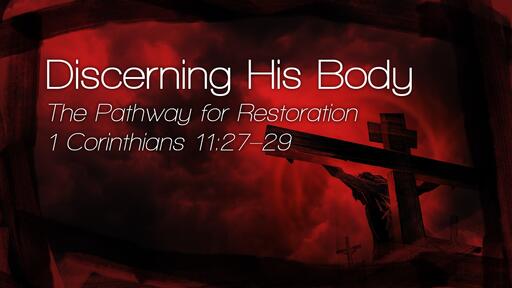
· 23 viewsPaul warned the Corinthian believers to approach the Lord’s Supper with reverence and self-examination, discerning the significance of Christ’s body. The Lord’s Supper calls believers to serious self-examination, ensuring they rightly discern the body of Christ and partake in a manner that honors Him.
Files
Notes
Transcript
2025 Lord's Table Series - Sermon Brief 3
Title: Discerning the Body
Text: 1 Corinthians 11:27-29
27 Wherefore whosoever shall eat this bread, and drink this cup of the Lord, unworthily, shall be guilty of the body and blood of the Lord. 28 But let a man examine himself, and so let him eat of that bread, and drink of that cup. 29 For he that eateth and drinketh unworthily, eateth and drinketh damnation to himself, not discerning the Lord’s body.
Central Idea of the Text (CIT): Paul warned the Corinthian believers to approach the Lord’s Supper with reverence and self-examination, discerning the significance of Christ’s body.
Proposition: The Lord’s Supper calls believers to serious self-examination, ensuring they rightly discern the body of Christ and partake in a manner that honors Him.
Statement of Purpose:
Major Objective (MO): Consecrative
Specific Objective (SO): I want my hearers to approach the Lord’s Supper with humility, self-examination, and a renewed focus on the significance of Christ’s atoning work.
Outline
Introduction
Introduction
A. The Lord’s Table is a sacred observance that demands reverence and preparation.
A. The Lord’s Table is a sacred observance that demands reverence and preparation.
Communion should be memorable. It is sacrilege to let it become a monotonous, routine ceremony. Thorough preparation and meaningful participation will enable us to sense God’s presence at the Lord’s Table and to be charged with God’s power and purpose as we serve Him in the world.
B. Scripture cautions against partaking unworthily, emphasizing the need for self-examination.
B. Scripture cautions against partaking unworthily, emphasizing the need for self-examination.
The Lord’s Supper makes clear to us that Jesus wanted His followers to remember that His magnificent ministry on earth was completed on a cross, where He suffered and died for the sins of the world. He wants us to remember the cross as the ultimate demonstration of His love for undeserving, self-centered sinners. And He wants us to remember that following him means being identified with Him. It means taking up a cross—suffering as He suffered, forgiving as He forgave, loving as He loved, and dying as He died.
[Adapted: T. T. Crabtree, The Zondervan 2024 Pastor’s Annual: An Idea and Resource Book (Grand Rapids, MI: Zondervan, 2023).]
C. Today, we will explore what it means to discern the body and approach the Table worthily.
C. Today, we will explore what it means to discern the body and approach the Table worthily.
I. The Warning Against Unworthy Participation (v. 27)
I. The Warning Against Unworthy Participation (v. 27)
27 Wherefore whosoever shall eat this bread, and drink this cup of the Lord, unworthily, shall be guilty of the body and blood of the Lord.
A. To partake unworthily is to treat the Lord’s Supper with irreverence.
A. To partake unworthily is to treat the Lord’s Supper with irreverence.
1. This dishonors Christ’s sacrifice (Hebrews 10:29).
1. This dishonors Christ’s sacrifice (Hebrews 10:29).
29 Of how much sorer punishment, suppose ye, shall he be thought worthy, who hath trodden under foot the Son of God, and hath counted the blood of the covenant, wherewith he was sanctified, an unholy thing, and hath done despite unto the Spirit of grace?
a. Irreverence trivializes the profound cost of His atonement.
a. Irreverence trivializes the profound cost of His atonement.
b. It reflects a heart that fails to grasp the gravity of sin.
b. It reflects a heart that fails to grasp the gravity of sin.
2. It trivializes the significance of His body and blood.
2. It trivializes the significance of His body and blood.
a. The elements represent the very foundation of our salvation.
a. The elements represent the very foundation of our salvation.
b. Partaking flippantly undermines their sacred meaning (Luke 22:19-20).
b. Partaking flippantly undermines their sacred meaning (Luke 22:19-20).
19 And he took bread, and gave thanks, and brake it, and gave unto them, saying, This is my body which is given for you: this do in remembrance of me. 20 Likewise also the cup after supper, saying, This cup is the new testament in my blood, which is shed for you.
B. Unworthy participation invites judgment.
B. Unworthy participation invites judgment.
1. God’s holiness demands reverence (1 Peter 1:16).
1. God’s holiness demands reverence (1 Peter 1:16).
16 Because it is written, Be ye holy; for I am holy.
a. He is a holy God who calls His people to holiness.
a. He is a holy God who calls His people to holiness.
b. Irreverence at the Table disregards this divine call.
b. Irreverence at the Table disregards this divine call.
2. The Lord disciplines those He loves (Hebrews 12:6).
2. The Lord disciplines those He loves (Hebrews 12:6).
6 For whom the Lord loveth he chasteneth, and scourgeth every son whom he receiveth.
a. Discipline is an act of God’s love, meant to restore.
a. Discipline is an act of God’s love, meant to restore.
b. The Supper should lead us to repentance, not judgment.
b. The Supper should lead us to repentance, not judgment.
Excursus:
Restoring the Backslider
19 Brethren, if any of you do err from the truth, and one convert him; 20 Let him know, that he which converteth the sinner from the error of his way shall save a soul from death, and shall hide a multitude of sins.
Illustration: The importance of restoration
A few years ago, an angry man rushed through the Rijks Museum in Amsterdam until he reached Rembrandt’s famous painting “Nightwatch.” Then he took out a knife and slashed it repeatedly before he could be stopped. A short time later, a distraught, hostile man slipped into St. Peter’s Cathedral in Rome with a hammer and began to smash Michelangelo’s beautiful sculpture The Pieta. Two cherished works of art were severely damaged. But what did officials do? Throw them out and forget about them? Absolutely not! Using the best experts, who worked with the utmost care and precision, they made every effort to restore the treasures.
By His sovereign grace, God can bring good out of our failures, and even out of our sins. J. Stuart Holden tells of an old Scottish mansion close to where he had his little summer home. The walls of one room were filled with sketches made by distinguished artists. The practice began after a pitcher of soda water was accidentally spilled on a freshly decorated wall and left an unsightly stain. At the time, a noted artist, Lord Landseer, was a guest in the house. One day when the family went out to the moors, he stayed behind. With a few masterful strokes of a piece of charcoal, that ugly spot became the outline of a beautiful waterfall, bordered by trees and wildlife. He turned that disfigured wall into one of his most successful depictions of Highland life.
Swindoll, The Quest For Character, Multnomah, p. 49
Illustration: He would not let him go
Author and teacher, Dr. Howard Hendricks tells the story of a young man who strayed from the Lord but was finally brought back by the help of a friend who really loved him. When there was full repentance and restoration, Dr. Hendricks asked this Christian how it felt away from the Lord. The young man said it seemed like he was out at sea, in deep water, deep trouble, and all his friends were on the shore hurling biblical accusations at him about justice, penalty, and wrong. “But, there was one Christian Brother who actually swam out to get me and would not let me go. I fought him, but he pushed aside my fighting, grasped me, put a life jacket around me, and took me to shore. By the grace of God, he was the reason I was restored. He would not let me go.”
(Source Unknown)
Quote: The high price of sin
“Christians can never sin cheaply; they pay a heavy price for iniquity. Transgression destroys peace of mind, obscures fellowship with Jesus, hinders prayer, brings darkness over the soul; therefore be not the serf and bondman of sin.”
Charles Spurgeon
Introduction: Sadly there are many Christians today who are not living for God and they have drifted far from him. It is important that a godly compassionate Christian seek to help restore them. Galatians 6:1 “Brethren, if a man be overtaken in a fault, ye which are spiritual, restore such an one in the spirit of meekness; considering thyself, lest thou also be tempted.” As Christians it is important that we love mercy and seek to help others in their time of need. Micah 6:8 “He hath shewed thee, O man, what is good; and what doth the LORD require of thee, but to do justly, and to love mercy, and to walk humbly with thy God?” If we do not love backslidden Christians and try to restore them then who will help them?
1. The Regression (5:19)
19 Brethren, if any of you do err from the truth, and one convert him;
a. The people: From the context it is clear that James uses the word “brethren” that he is addressing believers in this passage. James uses the word brethren 15 times in his epistle and each time it is talking about believers. It is important that we rightly divide the Word of God or will never make the wrong applications as we study the scriptures and that can lead to confusion and false doctrine. God is talking about believers here in this verse.
b. The problem: We see the word “err” which presents a warning here to believers. Err is defined as: “To wander from the right way; to deviate from the true course or purpose.” (Webster’s 1828 dictionary) Thayer defines err as: “to cause to stray, to lead astray, lead aside from the right way.” It is something that in subtle deceit will creep into a believer’s life and lead down a deadly path to destruction. We see that it is “the truth” that believers are wandering away from. If we are to avoid this in our life we must be vigilant at all times.
• The anchor: The Word of God is truth and when it is the anchor of our life we will not drift away from God. John 17:17 “Sanctify them through thy truth: thy word is truth.” It is not just having a copy of scripture, but we must study it and apply to our life each day. We cannot live our life on this earth as God intended it without the Word of God as Jesus made that very clear. Matthew 4:4 “But he answered and said, It is written, Man shall not live by bread alone, but by every word that proceedeth out of the mouth of God.” We must make the scripture our top priority. Job 23:12 “Neither have I gone back from the commandment of his lips; I have esteemed the words of his mouth more than my necessary food.”
• The attitude: It usually starts as a slow process that a person’s thinking about truth starts to change which will gradually affect their attitude. Their some in the world who question what truth is as did Pilate. John 18:38 “Pilate saith unto him, What is truth? And when he had said this, he went out again unto the Jews, and saith unto them, I find in him no fault at all.” Then there are those who live in an ungodly way in this world who seek to change the truth. Romans 1:25 “Who changed the truth of God into a lie, and worshipped and served the creature more than the Creator, who is blessed for ever. Amen.” We must never embrace any ideas that undermine or water down the truth of scripture. We must stand firm in our heart and in our mind. God wants us to be transformed and we can do that when we embrace the scripture in our heart and life. Romans 12:2 “And be not conformed to this world: but be ye transformed by the renewing of your mind, that ye may prove what is that good, and acceptable, and perfect, will of God.” When we have discernment we will see the dangers and avoid them.
• The action: When a person allows their attitude to sour toward the truth of God it will eventually lead to a person living in the wrong way and doing things at one time they would have condemned. It can be a slow process of weeks, months or years, but it will one day manifest itself if it is not repented of. A person does not wake up one day and decide to leave their spouse this process of wicked thinking has been going on for some time. People do not decide one Sunday morning to stop going to church or leave their church this fleshly thinking has been going on for some time. They will seek something going on in their home or church as the “justification” for their actions but in is a smokescreen for the sin in their heart. Christian homes and local churches have been deeply hurt by the actions of backslidden, immature and selfish believers.
• The apathy: When a person gets away from God and starts living in the wrong way their heart will grow colder and get hard. Hebrews 3:13 “But exhort one another daily, while it is called To day; lest any of you be hardened through the deceitfulness of sin.” Once the heart becomes hard it becomes more difficult for someone to get right with God. This is why the prayers and intervention of believers becomes very important. As Christians we are to be concerned for fellow believers and not think it is not our responsibility because it is. When a believer does not try to hide their sin and flaunts it in front of others their heart has grown hard and cold and they are in a very dangerous position.
• The avalanche: When this apathetic state continues eventually there will be judgement that will come down upon them unexpectedly like an avalanche. They will be devastated and not know what hit them. At this point they need a real Christian friend who will reach out to them and try to restore them. The goal is try to restore them before they reach this point because sometimes this judgement will include premature death because they are so far out of the will of God.
c. The potential: This verse also speaks about the potential for any believer to backslide when it says “if any of you do err” because at this time it had not happened yet. Everyone could possibly backslide in their life, but does not have to. 1 Corinthians 10:13 “There hath no temptation taken you but such as is common to man: but God is faithful, who will not suffer you to be tempted above that ye are able; but will with the temptation also make a way to escape, that ye may be able to bear it.” Any Christian can backslide. Peter never thought it could happen to him and let’s examine how he got into trouble.
• The monster of pride: Peter as well as all the other disciples where warned by Jesus about his followers being offended and scattering from him. Peter insisted he would never in that group. Matthew 26:33 “Peter answered and said unto him, Though all men shall be offended because of thee, yet will I never be offended.” Peter in his pride thought that he would never deny or forsake Jesus in any way. He was sure it would never happen to him. Matthew 26:34–35 (34) “Jesus said unto him, Verily I say unto thee, That this night, before the cock crow, thou shalt deny me thrice. (35) Peter said unto him, Though I should die with thee, yet will I not deny thee. Likewise also said all the disciples.” Peter had too much confidence in the flesh, how about you?
• The minimizing of prayer: Peter was exhorted to pray when Jesus went alone in prayer, but allowed his flesh to get the best of him and fell asleep. Mark 14:37–38 (37) “And he cometh, and findeth them sleeping, and saith unto Peter, Simon, sleepest thou? couldest not thou watch one hour? (38) Watch ye and pray, lest ye enter into temptation. The spirit truly is ready, but the flesh is weak.” When we depend upon our flesh we do not think we need to pray and that our will power and determination is enough. We live in a world today where little emphasis is placed on prayer and very few Christians make it a priority in their life. Ultimately we will make time for what we think is important in our life.
“There is one important consideration those who declare it to be impossible to keep God’s commandments strangely overlook, and that is the vital truth, which declares that through prayer and faith, man’s nature is changed, and made partaker of the Divine nature; that there is taken out of him all reluctance to obey God, and that his natural inability to keep God’s commandments, growing out of his fallen and helpless state, is gloriously removed. By this radical change which is wrought in his moral nature, a man receives power to obey God in every way, and to yield full and glad allegiance. Then he can say, “I delight to do Thy will, O my God.” Not only is the rebellion incident to the natural man removed, but a heart which gladly obeys God’s Word, blessedly received.” (The Complete Works of E. M. Bounds.)
• The mingling at the wrong place: Peter was in the wrong place and not where the Lord Jesus would have him to be at that time. Mark 14:54 “And Peter followed him afar off, even into the palace of the high priest: and he sat with the servants, and warmed himself at the fire.” It was at this place that Peter began to do what he said he never would do. There are certain places as Christians we have no business going and it is important that we separate from that which is evil in our world today. I know that this is not a popular teaching today, but it is important that we practice it. 2 Corinthians 6:17 “Wherefore come out from among them, and be ye separate, saith the Lord, and touch not the unclean thing; and I will receive you.” Biblical separation is essential if we are going to be a consecrated believer.
• The misery of the wrong practice: Peter followed his flesh and did what he said he would never do. When Peter committed that horrible act he faced the most painful thing in this spiritual life. Luke 22:60–62 (60) “And Peter said, Man, I know not what thou sayest. And immediately, while he yet spake, the cock crew. (61) And the Lord turned, and looked upon Peter. And Peter remembered the word of the Lord, how he had said unto him, Before the cock crow, thou shalt deny me thrice. (62) And Peter went out, and wept bitterly.” If we do not deal with sin in our life now we could face this type of experience at the judgment seat of Christ except there will be no chance to change anything at that point.
d. The possibility: James offers hope when he says “and one convert him:” that we can make a difference in another believer’s life. This truth should excite as we realize that no person is beyond the grace of God. As long as someone is still alive and God is still on the throne there is hope. Barnabas saw hope when he looked at John Mark and wanted to restore him. Acts 15:37 “And Barnabas determined to take with them John, whose surname was Mark.” Paul did not see it at first and wanted nothing to do with it. However years later he realized that this man was a good servant who had been restored thanks to the work of Barnabas. 2 Timothy 4:11 “Only Luke is with me. Take Mark, and bring him with thee: for he is profitable to me for the ministry.” Do not give up on people as God can use you to make a difference in a backslider’s life and help bring them back to God. God wants to use you in this way as we there are many people in our world today who have wondered away from the Lord. This is a form of ministry that sadly is greatly neglected today.
2. The [1. Regression…] Rescue (5:20a)
20 Let him know, that he which converteth the sinner from the error of his way shall save a soul from death, and shall hide a multitude of sins.
a. The confidence: God uses the words “Let him know,” because he wants us to have confidence that the backslider can be reached. Know is defined as: “To perceive with certainty; to understand clearly; to have a clear and certain perception of truth, fact, or any thing that actually exists.” (Webster’s 1828 dictionary) God makes it very clear that we can be used as a human instrument in helping brethren who have wondered away from God. 2 Corinthians 5:18–19 (18) “And all things are of God, who hath reconciled us to himself by Jesus Christ, and hath given to us the ministry of reconciliation; (19) To wit, that God was in Christ, reconciling the world unto himself, not imputing their trespasses unto them; and hath committed unto us the word of reconciliation.”
b. The challenge: The great task is if we can reach the backslider and turn them “from the error of his way” which we will need God’s help. It takes a lot of work to try to rescue people from poor choices that they have made that have begun to mess up their life. There are some real obstacles and dangers that have to be dealt with in this type of work.
• They are dangerous to their own faith: Because of their sin they are in danger of being disciplined by the Lord. Hebrews 12:6 “For whom the Lord loveth he chasteneth, and scourgeth every son whom he receiveth.” When a believer does not repent of their sin they are in danger of being taken home to heaven prematurely which the bible calls the sin unto death. 1 John 5:16 “If any man see his brother sin a sin which is not unto death, he shall ask, and he shall give him life for them that sin not unto death. There is a sin unto death: I do not say that he shall pray for it.” We see several examples of that in the bible including Uzzah sin that cost him his life. 2 Samuel 6:7 “And the anger of the LORD was kindled against Uzzah; and God smote him there for his error; and there he died by the ark of God.” We see that the carnally minded believers at the church of Corinth suffered because of their sin. 1 Corinthians 11:29–30 (29) “For he that eateth and drinketh unworthily, eateth and drinketh damnation to himself, not discerning the Lord’s body. (30) For this cause many are weak and sickly among you, and many sleep.”
→ The exaltation: The Lord’s Supper is a special time and it was instituted to remember what Jesus has done for us, deepen our affection for him and draw closer to him in our relationship. 1 Corinthians 11:24 “And when he had given thanks, he brake it, and said, Take, eat: this is my body, which is broken for you: this do in remembrance of me.”
→ The expectation: That we would practice the Lord’s Supper in a worthy manner not that we are worthy in ourselves. God expects us to realize that is a sacred moment and prepare our heart, 1 Corinthians 11:27 “Wherefore whosoever shall eat this bread, and drink this cup of the Lord, unworthily, shall be guilty of the body and blood of the Lord.” We should have the right attitude as we approach the things of God and not act like we are doing God a favor by being in church and participating in the Lord’s Supper.
→ The examination: It is important that we take time to examine our heart and life before we partake of the Lord’s Supper. We need to confess our sin before we participate in the Lord’s Supper and deal with it properly. 1 Corinthians 11:28 “But let a man examine himself, and so let him eat of that bread, and drink of that cup.” Any known sin in our life should be confessed to God during this examination process.
→ The exhortation: This is a serious sin and it is not to be treated lightly. We need to have a reverence, respect and fear of the Lord. It is a big mistake to take for a person to treat this time irreverently, 1 Corinthians 11:29 “For he that eateth and drinketh unworthily, eateth and drinketh damnation to himself, not discerning the Lord’s body.”
→ The enforcement: If we do not listen to the warning God gives in scripture we will be judged for it. 1 Corinthians 11:30 “For this cause many are weak and sickly among you, and many sleep.” Too many people today act like God has to accept them no matter what they do and that is not the case. This careless approach of the world has been embraced by some believers.
→ The encouragement: If we judge ourselves then we will not be judged by God. It is always best to deal with your sin first, 1 Corinthians 11:31 “For if we would judge ourselves, we should not be judged.” God wants us to draw close to him and partake of the Lord’s Supper.
• They are dangerous to their own family: When someone in a home especially the dad gets out of the will of God it is dangerous for the whole family. When Abraham got out of God’s will and went to Egypt he took his family out of the will of God also. I believe it was in Egypt that Lot developed a love for the world and that is why he was attracted to Sodom when he left Abraham. Abraham recovered from being in Egypt, but Lot never did. When Elimelech got out of the will of God it had a very negative affect on his family that progressively got worse. Let’s take a close look at how this process happened.
→ His decision: Elimelech decided to go to Moab and this led his family out of the will of God. Ruth 1:2 “And the name of the man was Elimelech, and the name of his wife Naomi, and the name of his two sons Mahlon and Chilion, Ephrathites of Bethlehemjudah. And they came into the country of Moab, and continued there.”
→ His death: Elimelech never thought he would die in Moab. When you leave God’s will things never work out like you plan them to. Ruth 1:3 “And Elimelech Naomi’s husband died; and she was left, and her two sons.” This was supposed to be a short stay and it was 10 years before Naomi came back home. Sin always keeps you longer than you plan on staying.
→ Home disappointment: There two sons sadly married out of the will of God because the family had been living out of the will of God for many years. Ruth 1:4 “And they took them wives of the women of Moab; the name of the one was Orpah, and the name of the other Ruth: and they dwelled there about ten years.” Parents the decisions you make are very important.
→ Her devastation: Both of Naomi’s sons had died and now she had reached the bottom. Ruth 1:5 “And Mahlon and Chilion died also both of them; and the woman was left of her two sons and her husband.” Now Naomi had no one to take care of her in as she dwelt in Moab. She at one time was full and no she was empty. When you leave the will of God the devil makes great promises, but they are all lies and you will eventually end up with nothing.
→ Her determination: Naomi was going to go back to Israel. Ruth 1:6 “Then she arose with her daughters in law, that she might return from the country of Moab: for she had heard in the country of Moab how that the LORD had visited his people in giving them bread.” The way you get back in the will of God is you have to go back to where you were before you got away from God. If you are out of the will of God today get it right immediately and if you know someone who is out of God’s will seek to help restore them.
• They are dangerous to their own fellowship: Backslidden Christians set poor examples an can lead other believers astray. Balaam was a prophet who compromised and yoked up with the ungodly king of Moab. His poor example led many people astray in the nation of Israel and had tragic results. Numbers 31:16 “Behold, these caused the children of Israel, through the counsel of Balaam, to commit trespass against the LORD in the matter of Peor, and there was a plague among the congregation of the LORD.” Because of his compromise 24,000 people died in that plague. There is much compromise going on in our modem world today and it is leading many Christians astray and ruining many lives.
c. The completion: Getting them to turn their life around and rescue them from the destructive path they were on is what the goal is. This is not easy to do, but by the grace of God it can be done. We see that Barnabas was used of God to help believers that no one else believed to grow and flourish. When Paul first got saved no one believed that it was real. They thought it was some kind of trick and that he was going to try to persecute more believers in the local churches. Paul went back to his hometown and was doing nothing for God until Barnabas came to him. Acts 11:25–26 (25) “Then departed Barnabas to Tarsus, for to seek Saul: (26) And when he had found him, he brought him unto Antioch. And it came to pass, that a whole year they assembled themselves with the church, and taught much people. And the disciples were called Christians first in Antioch.” It was at the church at Antioch that God called Paul to his great ministry of church planting and mission work. Then Barnabas also helped restore John Mark who quit the ministry earlier. Paul was against it and over that issue he split with Barnabas and their missionary team broke up. Years later Paul realized he was wrong and Mark was a valuable asset to the ministry. 2 Timothy 4:11 “Only Luke is with me. Take Mark, and bring him with thee: for he is profitable to me for the ministry.”
3. The [1. Regression… 2. Rescue…] Rejoicing (5:20b)
a. Rejoice in their rescue: When a backslider is reclaimed then praise God they are going in the right direction once again. Before they were in danger of a premature death, but praise God they are now in a place where they can be blessed once again. You look what God did for Naomi when she and Ruth came back to Israel. God blessed them beyond their wildest dreams. Even though someone may not be living in what we term “deep sin” if they are out of the will of God they are going in the wrong direction and one day will crash. I remember in a church I was pastor of in Western New York there was a man who started coming to church. His family had already been coming and now he started faithfully attending though it had been years since he had been to church. A relative once said to me that he thought he would never faithfully come to church again. It is so important that we do not give up on anybody.
b. Rejoice in their repentance: The multitude of sins they have committed when they left the will of God have been confessed. Once are sins are confessed to Jesus they are forgiven, 1 John 1:9 “If we confess our sins, he is faithful and just to forgive us our sins, and to cleanse us from all unrighteousness.” We should rejoice greatly when someone comes back home where they belong. We see that the father greatly rejoiced when the prodigal son came home again. Luke 15:32 “It was meet that we should make merry, and be glad: for this thy brother was dead, and is alive again; and was lost, and is found.” The father saw his son afar off when he came home I believe because he looked for him every day. We need to be on a mission to rescue as many believers as we can who on the wrong path and rejoice when they get back on the right track.
[Kurt John LaCapruccia, Bible Feast in James: Evidence of Spiritual Growth, Bible Feast Series (Kurt John LaCapruccia Bible Feast Ministries, 2016), 132–139.]
End Excursus (Conclude Message Here)
Illustration: Picture a banquet held in honor of a hero, where attendees act carelessly, ignoring the occasion’s significance. Such behavior dishonors the honoree, much like irreverence at the Lord’s Table dishonors Christ.
Transition: Recognizing the seriousness of this warning, we now turn to the importance of self-examination before partaking.
II. The Call to Self-Examination (v. 28)
II. The Call to Self-Examination (v. 28)
A. Self-examination ensures a proper approach to the Table.
A. Self-examination ensures a proper approach to the Table.
1. "Let a man examine himself..."
1. "Let a man examine himself..."
a. This examination involves assessing one’s relationship with Christ (2 Corinthians 13:5).
a. This examination involves assessing one’s relationship with Christ (2 Corinthians 13:5).
5 Examine yourselves, whether ye be in the faith; prove your own selves. Know ye not your own selves, how that Jesus Christ is in you, except ye be reprobates?
b. It includes identifying unconfessed sin and seeking forgiveness (1 John 1:9).
b. It includes identifying unconfessed sin and seeking forgiveness (1 John 1:9).
9 If we confess our sins, he is faithful and just to forgive us our sins, and to cleanse us from all unrighteousness.
2. The Supper is a time to realign our hearts with God’s will.
2. The Supper is a time to realign our hearts with God’s will.
a. Reflection fosters humility and repentance (Psalm 139:23-24).
a. Reflection fosters humility and repentance (Psalm 139:23-24).
23 Search me, O God, and know my heart: try me, and know my thoughts: 24 And see if there be any wicked way in me, and lead me in the way everlasting.
b. It renews our commitment to live in obedience and gratitude.
b. It renews our commitment to live in obedience and gratitude.
B. Proper participation reflects reverence and readiness.
B. Proper participation reflects reverence and readiness.
1. "...and so let him eat of that bread, and drink of that cup."
1. "...and so let him eat of that bread, and drink of that cup."
a. Examination is not meant to exclude but to prepare us for meaningful participation.
a. Examination is not meant to exclude but to prepare us for meaningful participation.
b. The Table is an invitation to approach God with a clean heart (Matthew 5:8).
b. The Table is an invitation to approach God with a clean heart (Matthew 5:8).
8 Blessed are the pure in heart: for they shall see God.
2. Worthy participation honors Christ’s sacrifice and unites believers in fellowship (1 Corinthians 10:16-17).
2. Worthy participation honors Christ’s sacrifice and unites believers in fellowship (1 Corinthians 10:16-17).
16 The cup of blessing which we bless, is it not the communion of the blood of Christ? The bread which we break, is it not the communion of the body of Christ? 17 For we being many are one bread, and one body: for we are all partakers of that one bread.
Illustration: Consider a soldier inspecting their gear before battle. Without careful preparation, they risk failure. Similarly, self-examination equips believers to partake in the Supper with reverence and purpose.
Transition: Once we have examined ourselves, we must also discern the body of Christ, understanding its significance and implications.
III. The Importance of Discerning the Body (v. 29)
III. The Importance of Discerning the Body (v. 29)
A. Discerning the body involves understanding the significance of Christ’s sacrifice.
A. Discerning the body involves understanding the significance of Christ’s sacrifice.
1. "For he that eateth and drinketh unworthily..."
1. "For he that eateth and drinketh unworthily..."
a. Failure to discern the body reflects a lack of reverence for His atoning work (Isaiah 53:4-5).
a. Failure to discern the body reflects a lack of reverence for His atoning work (Isaiah 53:4-5).
4 Surely he hath borne our griefs, and carried our sorrows: yet we did esteem him stricken, smitten of God, and afflicted. 5 But he was wounded for our transgressions, he was bruised for our iniquities: the chastisement of our peace was upon him; and with his stripes we are healed.
b. It diminishes the spiritual realities symbolized by the bread and cup (John 6:51).
b. It diminishes the spiritual realities symbolized by the bread and cup (John 6:51).
51 I am the living bread which came down from heaven: if any man eat of this bread, he shall live for ever: and the bread that I will give is my flesh, which I will give for the life of the world.
2. Discerning the body calls for worshipful recognition of His brokenness for our sins.
2. Discerning the body calls for worshipful recognition of His brokenness for our sins.
a. Christ’s body was given to reconcile us to God (Ephesians 2:16).
a. Christ’s body was given to reconcile us to God (Ephesians 2:16).
16 And that he might reconcile both unto God in one body by the cross, having slain the enmity thereby:
b. The Supper invites believers to reflect deeply on this truth.
b. The Supper invites believers to reflect deeply on this truth.
B. Discerning the body involves recognizing the unity of believers in Christ.
B. Discerning the body involves recognizing the unity of believers in Christ.
1. The body of Christ also refers to the church (1 Corinthians 12:27).
1. The body of Christ also refers to the church (1 Corinthians 12:27).
27 Now ye are the body of Christ, and members in particular.
a. Disunity and strife hinder the worship and testimony of the church (1 Corinthians 11:18-19).
a. Disunity and strife hinder the worship and testimony of the church (1 Corinthians 11:18-19).
18 For first of all, when ye come together in the church, I hear that there be divisions among you; and I partly believe it. 19 For there must be also heresies among you, that they which are approved may be made manifest among you.
b. True discernment fosters love and harmony within the body (Ephesians 4:2-3).
b. True discernment fosters love and harmony within the body (Ephesians 4:2-3).
2 With all lowliness and meekness, with longsuffering, forbearing one another in love; 3 Endeavouring to keep the unity of the Spirit in the bond of peace.
2. The Supper is a reminder of our shared identity and mission as His body (1 Corinthians 10:17).
2. The Supper is a reminder of our shared identity and mission as His body (1 Corinthians 10:17).
17 For we being many are one bread, and one body: for we are all partakers of that one bread.
Illustration: Picture a family meal where everyone is focused on their own concerns, ignoring the unity that the meal is meant to symbolize. The Lord’s Supper calls us to unity, reminding us that we are one body in Christ.
C. Proper discernment leads to spiritual health and growth.
C. Proper discernment leads to spiritual health and growth.
1. "...eateth and drinketh damnation to himself."
1. "...eateth and drinketh damnation to himself."
a. This is not eternal condemnation but God’s discipline for irreverence (1 Corinthians 11:30-32).
a. This is not eternal condemnation but God’s discipline for irreverence (1 Corinthians 11:30-32).
30 For this cause many are weak and sickly among you, and many sleep. 31 For if we would judge ourselves, we should not be judged. 32 But when we are judged, we are chastened of the Lord, that we should not be condemned with the world.
b. Discipline aims to restore believers to a right relationship with God.
b. Discipline aims to restore believers to a right relationship with God.
2. Discerning the body strengthens our faith and fosters holiness (Hebrews 12:10-11).
2. Discerning the body strengthens our faith and fosters holiness (Hebrews 12:10-11).
10 For they verily for a few days chastened us after their own pleasure; but he for our profit, that we might be partakers of his holiness. 11 Now no chastening for the present seemeth to be joyous, but grievous: nevertheless afterward it yieldeth the peaceable fruit of righteousness unto them which are exercised thereby.
Application: As you partake in the Supper, ask yourself: Do I truly understand the cost of Christ’s sacrifice? Am I living in unity with my brothers and sisters in Christ? Let this time of discernment renew your commitment to Him and His church.
Conclusion
Conclusion
A. Reflection: Take time to examine your heart before approaching the Table.
A. Reflection: Take time to examine your heart before approaching the Table.
B. Reconciliation: Address unresolved conflicts and pursue unity.
B. Reconciliation: Address unresolved conflicts and pursue unity.
C. Reverence: Partake with gratitude and awe, remembering Christ’s sacrifice.
C. Reverence: Partake with gratitude and awe, remembering Christ’s sacrifice.
