September 14, 2025 — Pentecost 14
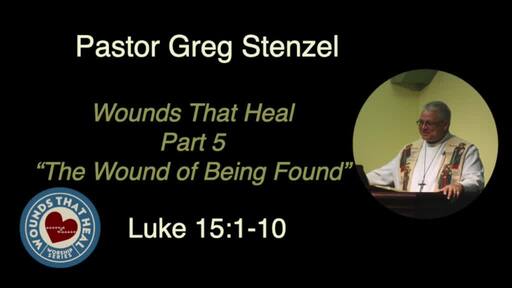

Wounds That Heal • Sermon • Submitted • Presented • 21:44
0 ratings
· 8 viewsGoal: Rejoice that Christ seeks, finds, restores the lost. Malady: We resist admitting our lostness, hiding in sin or pride. Means: Christ the Shepherd seeks and saves—wounding with repentance, healing with mercy.
Files
Notes
Transcript
The Wound of Being Found
Luke 15:1–10
Series: Wounds That Heal,
Part 5
The Wound of Being Found
Luke 15:1–10
Series: Wounds That Heal,
Part 5
Introduction
Introduction
In the name of Jesus. Amen.
“This man welcomes sinners and eats with them.”
That was the Pharisees’ complaint. The Pharisees were the religious folks in Jesus’ day. They were members of one of the most important and influential religious and political parties of Judaism in the time of Jesus. According to the historian Josephus (Antiquities 17.2.4 [17.42]), there were more than 6,000 Pharisees at the time of Jesus. The Pharisees were strict and zealous adherents to the laws of the Old Testament.
And so for the Pharisees, Jesus welcoming and eating with sinners was scandalous. Jesus welcomed them into fellowship with Him. He sat at their tables. He shared bread with them. He acted as if people who had wandered far from God were worth celebrating instead of condemning.
And yet what the Pharisees meant as an insult is, in fact, the greatest Gospel comfort:
Jesus welcomes sinners and eats with them.
He welcomes you.
He eats with you.
This connects with the theme of our series, Wounds That Heal. Each week in this series we have been learning how the Word of Christ’s truth may wound us at first, but that wound leads to His healing mercy. Last Sunday we heard about the wound of cheap grace, which pretends to offer forgiveness without repentance. Today, we see The Wound of Being Found: how the Shepherd wounds the lost with repentance, and then heals with His mercy.
I. The Wound of Lostness
I. The Wound of Lostness
Jesus tells the parables of a lost sheep and a lost coin. They’re not random stories. They’re snapshots of our condition apart from Him.
A sheep that wanders away doesn’t know how to get back. It’s helpless, exposed to predators, huddled and trembling. A coin that rolls into the shadows is lifeless. It can’t shout, “Here I am!” It lies there in the dust until someone comes to lift it.
That is Jesus’ way of saying: “This is what it means to be lost.” We like to think of ourselves as strong, capable, and resourceful. But when it comes to spiritual matters, being lost means helpless. On our own, we cannot return. We cannot save ourselves.
And this isn’t only about those who seem to be far gone in visible sin. Luke tells us that tax collectors and notorious sinners were drawing near to Jesus. They knew their lostness. But the Pharisees and scribes were just as lost, though in a different way. Their pride, their smugness, their disdain for others—these were signs that they too were wandering in the wilderness of sin.
Last Sunday we reflected on the danger of “cheap grace,” where cheap grace wants forgiveness without repentance. It wants the Shepherd’s comfort without admitting we’ve strayed. It allows us to cling to our sins while pretending all is well with God. But cheap grace is really no grace at all. It leaves us lost.
Costly grace, on the other hand, does what cheap grace refuses to do:
It wounds us with the truth.
It confronts our unfaithfulness.
It strips away our excuses.
It drives us to admit: “Lord, I am lost.”
That’s what Hosea 3 shows so vividly. God told the prophet Hosea to love his adulterous wife again, to go and seek her out and bring her back, even though she had betrayed him. What a painful command! And yet, it was a living parable of God’s love for Israel and us. They had been unfaithful, running after other gods. They had sold themselves away like a sheep straying into spiritual barrenness, like a coin slipping into the shadows. But God still sought them out.
And just as the sheep and the coin are helpless without someone to seek them, so Israel’s unfaithfulness in Hosea’s day shows us how painful and costly it is to be lost. The Shepherd’s search begins by wounding our pride, tearing off the bandage of cheap grace, and showing us the truth. Only then can the true healing come.
Repentance, then, is not just feeling sorry or promising to do better next time. Repentance is the work of God, not the work of man. The sheep doesn’t drag itself home. The coin doesn’t roll back into the woman’s hand. Hosea’s wife doesn’t suddenly decide to be faithful again. In every case, it is God who acts first. He seeks. He wounds. He carries. He restores.
This is why cheap grace is so dangerous. Cheap grace says, “I can live however I want. God will forgive me anyway.”
But that is not repentance—IT IS REBELLION.
Real repentance means God has found us, exposed our sin, and turned our hearts back to Him. It hurts—it wounds our pride. It forces us to say, “Lord, I have wandered. Lord, I have betrayed You. Lord, I cannot find my way home.”
God is calling all of us, each of us individually to repentance. We, too, have been guilty of cheapening grace. Living with the attitude that God doesn’t care if I put other things and activities ahead of Christ, breaking the First Commandment. We rationalize our absence on Sunday by saying, “I don’t have to be in a building to worship God.” The problem is, we don’t. We prioritize sports over worship, and seeing to it that our children are being grounded in God’s Word. Something else always seems to be more important.
Friends, Chirst the Lord is calling us to repent. Repentance is not despair. It is the beginning of joy. To repent is to be carried on the Shepherd’s shoulders, to be restored to the Father’s house, and it causes the angels to rejoice!
II. The Shepherd Who Seeks and Saves
II. The Shepherd Who Seeks and Saves
And here’s the good news: the Shepherd doesn’t give up.
He leaves the ninety-nine sheep grazing in the open country and goes after the one that is lost until He finds it. The woman lights a lamp, sweeps the house, and searches diligently until she finds her lost coin.
That is not a “search and destroy” mission. It’s a search and rescue mission, and His count at the end is how many lives are saved.
Why does He seek us? Not because of anything in us. Not because of our worthiness. We often think, “God must love me because I’ve done something good.” Or we despair, “God can’t love me because I’ve failed too much; you don’t realize how far I have fallen.” Both are wrong.
He loves us because that is His nature. “God is love.” He goes in search of the lost because His heart cannot do otherwise.
And how far does He go? All the way to the cross. The shepherd lifts the sheep onto His shoulders. That picture in Luke 15 points directly to Calvary, where Christ bore our sins on His shoulders, carrying the burden of our guilt to death. Without His shouldering of that burden, there is no restoration. With it, there is salvation.
He seeks through the Law, showing us our sin.
He seeks through the Gospel, forgiving, carrying, restoring.
And He continues His seeking today—through Word and Sacrament, through preaching and teaching, through the witness of His people.
That’s exactly what Paul reminds the Corinthians of in our second reading. A member of their church had been caught in serious sin. The congregation had confronted him, and he repented. And so Paul now urges them to forgive and comfort him, lest Satan take advantage. The discipline was wounded, but now mercy was to heal. Like the shepherd carrying the sheep, the church was to carry this brother back into fellowship, rejoicing over his return.
Do you see how Hosea and Corinth fit together? Hosea shows God’s radical pursuit of the unfaithful. Corinthians shows how the community shares in God’s work—restoring the fallen with forgiveness and love. That’s the way the Shepherd works: wounding in order to heal, searching in order to save, carrying in order to restore.
III. The Joy of Heaven and Earth
III. The Joy of Heaven and Earth
And when the lost are restored—oh, the joy!
The shepherd comes home, calling his friends and neighbors: “Rejoice with me, for I have found my sheep that was lost.” The woman calls her friends and neighbors: “Rejoice with me, for I have found the coin that I had lost.”
Jesus says there is joy in heaven over one sinner who repents—more joy than over ninety-nine who think they have no need of repentance.
The Pharisees refused to rejoice. They grumbled. They couldn’t imagine God celebrating over sinners. And sometimes, if we’re honest, we act the same way. We look down on those whose sins are public and scandalous. We hesitate to welcome them. We even grumble when God’s mercy reaches out too far.
But heaven rejoices. The Angelic hosts rejoice. And if heaven celebrates, shouldn’t we?
If there is joy over your repentance—yes, over you personally being found and restored—shouldn’t that shape the way we treat others?
As incredible joy that floods heaven with every heart that returns to the fold that joy is not just the angels’—it’s meant to be ours too.
The mission of Our Redeemer’s Lutheran Church is not to keep a neat, tidy flock of “good people.” We are here to share in the Shepherd’s joy of searching, finding, and restoring. But what does it look like for us, here at Our Redeemer’s, to join in the Shepherd’s joy?
Think of what happens when a member drifts away from worship and fellowship. Maybe it starts small—a busy schedule, a missed Sunday or two, or maybe frustrations and hurt feelings. Before long, they are like a sheep alone in the wilderness.
Sharing the Shepherd’s joy means noticing, reaching out, sending a card, making a phone call, inviting them back, praying for them. And when they return, instead of saying, “Where have you been?”—we say, “We’re so glad you’re here.” That is heaven’s joy spilling into our fellowship.
[Closing Call to Action]
So together, let's commit to being reflections of the Shepherd's love, reaching out with open arms and open hearts. Whether it’s a gentle word, a listening ear, or a simple “welcome back,” we become the echo of God’s celebration. Picture what it would mean for us all to carry just a little bit of that heavenly joy into our daily interactions.
No matter where we find ourselves—whether feeling carried on His shoulders or as those doing the carrying—we are part of God’s great story of redemption. Let each of us leave this place today with renewed purpose: to rejoice in the grace that finds us, to celebrate the mercy that restores us, and to spread the joy that unites us.
May our lives together be a testament to the unending joy that is found in Jesus Christ, who always welcomes us and eats with sinners.
Conclusion
Conclusion
As we come to the close of today’s message, let us remember the profound truth of our faith: the wound of being found is real. It pierces our pride, strips away self-sufficiency, and exposes our sin. But in that moment of vulnerability, the Shepherd’s grace abounds all the more.
You are not alone. You are not lost without hope. In Christ, you have been found. You have been lifted up, placed on His shoulders, and carried back into His loving embrace. Once you were lost, but now you are found. Once you wandered in darkness, but now you walk in the light of His mercy.
And so, He calls each of us to participate in His redemptive work. Rejoice in your own salvation. Rejoice in the salvation of others. Let heaven’s joy overflow into your life, your home, and in our congregation.
May we always reflect the heart of our Savior, who tirelessly seeks and joyously welcomes sinners to His table. Go forth with this assurance, knowing that Jesus Christ—our Shepherd and Redeemer—welcomes you, eats with you, and rejoices over you.
Thanks be to God. Amen.
