Peace in the Storm - Sep. 21st, 2025
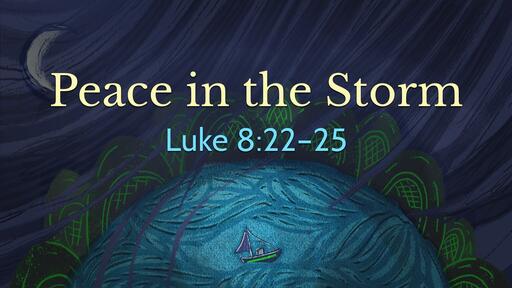

Luke: Living in Light of Promise • Sermon • Submitted • Presented • 1:08:31
0 ratings
· 11 viewsJesus demonstrated His divine authority by calming a storm and then rebuked His disciples’ lack of faith. Jesus can still calm the storms in our lives, so we must trust Him and not fear. Trust Jesus through life’s storms and you’ll not succumb to fear.
Files
Notes
Transcript
22 Now it came to pass on a certain day, that he went into a ship with his disciples: and he said unto them, Let us go over unto the other side of the lake. And they launched forth. 23 But as they sailed he fell asleep: and there came down a storm of wind on the lake; and they were filled with water, and were in jeopardy. 24 And they came to him, and awoke him, saying, Master, master, we perish. Then he arose, and rebuked the wind and the raging of the water: and they ceased, and there was a calm. 25 And he said unto them, Where is your faith? And they being afraid wondered, saying one to another, What manner of man is this! for he commandeth even the winds and water, and they obey him.
Central Idea of the Text (CIT): Jesus demonstrated His divine authority by calming a storm and then rebuked His disciples’ lack of faith.
Sermonic Proposition: Jesus can still calm the storms in our lives, so we must trust Him and not fear.
Statement of Purpose: Supportive – I want my hearers to trust Jesus through life’s storms and not succumb to fear.
Introduction
Introduction
A crack of thunder, a sudden gale – imagine being caught in a small boat as a violent storm erupts without warning. One moment the water is glassy; the next, waves are crashing, and panic sets in.
Life often feels like that. One phone call, one diagnosis, one crisis, and our calm is shattered. We all face storms – times when we’re overwhelmed and afraid. In those moments, where do we turn, and in whom do we trust?
The disciples of Jesus faced that very question on the Sea of Galilee. Luke 8:22–25 tells the dramatic story of a day when an ordinary boat ride turned into a life-threatening tempest.
Through it, the disciples learned a lesson we need just as much today: if Jesus is with us, no storm can destroy us, and we need not be afraid. This passage shows Jesus’ power over the storm and His call for faith over fear. In fact, the big idea is this: Because Jesus is Lord over every storm, you and I should trust Him through all of life’s tempests rather than give in to fear.
Let’s journey through this text together and see how it speaks to our storms.
I. Christ’s Initiative – Launching a Journey of Faith (Luke 8:22)
I. Christ’s Initiative – Launching a Journey of Faith (Luke 8:22)
Explanation:
Our story begins calmly: “Now it came to pass on a certain day, that He went into a ship with His disciples.” It was an ordinary day, and Jesus Himself says to them, “Let us go over unto the other side of the lake.”
Notice, Jesus initiates this journey. He leads His disciples into the boat and onto the sea. They willingly follow, obedient to their Master’s direction. There is no hint of danger at the start – just an everyday boat ride at Jesus’ word.
Yet, that word carried an important promise: “Let us go over to the other side.” Jesus didn’t say, “Let’s go out and drown in the middle.” He intended to reach the far shore with them.
Though the disciples don’t realize it, their safety is already assured by His command. By boarding the boat, they are squarely in the will of God. In His sovereignty, Christ knows what is coming. He is deliberately guiding them into a situation that will test and grow their faith.
There is no accident here – the upcoming storm is part of His divine lesson plan. Sometimes the Lord leads us into challenging journeys on purpose, not to harm us, but to deepen our trust in Him.
Illustration:
Think of Israel at the Red Sea. After God led them out of Egypt, He directed them straight to a dead end – hostile army behind, an impassable sea before. It looked like a trap, but it was God’s plan to display His glory and save His people. The Lord often guides us into a trial only to show His power to deliver. Here in Luke, Jesus says “Let’s cross over,” fully aware a storm is on its way. He leads us into tests of faith, not to abandon us, but to reveal Himself in new ways. Just as the Red Sea’s impasse became the stage for a miracle, this ordinary sail will become the stage for a mighty work of Christ.
Application:
Don’t fear when you find yourself in a storm while obeying Jesus. Being in the center of God’s will does not mean we’ll never face trouble – often, it means God purposely sends us into situations that require faith. Has the Lord directed you on a path that suddenly grew difficult? Remember that He said “Let us go over” – He intends to bring you through. Trust His Word and His purpose. If Christ has called you into a venture (a ministry, a marriage, a new direction in life), you can trust that He is with you and has a plan, even if unexpected storms arise. Take heart that when Jesus initiates a journey, He also obligates Himself to see you to the other side.
Transition:
The disciples set sail in obedience, not knowing what lay ahead. Often we embark on life’s journey full of hope, until suddenly the skies darken. What happens next in the story reminds us that even when Jesus leads us, storms will come – and they often come without warning.
II. Tempest Strikes – Jesus’ Humanity and a Test of Faith (Luke 8:23)
II. Tempest Strikes – Jesus’ Humanity and a Test of Faith (Luke 8:23)
Explanation:
As the disciples sail, the unexpected happens: “But as they sailed He fell asleep: and there came down a storm of wind on the lake.”
Picture the scene: the tranquil beginning turns into turmoil. A fierce windstorm sweeps down through the hills surrounding Galilee, whipping the sea into a frenzy. Waves crash over the sides. In no time, the boat is taking on water. Luke tells us “they were filled with water, and were in jeopardy” – in danger of sinking! Even these seasoned fishermen find themselves helpless. Now, notice two striking details.
First, Jesus is asleep. Exhausted from ministry, He lies in the stern on a pillow (as Mark’s Gospel notes), sleeping soundly right as the squall hits. This is the only place in Scripture that specifically mentions Jesus sleeping, and how remarkable that it occurs during a storm! It shows us Jesus’ true humanity – He knew weariness and needed rest. But it also paints a powerful contrast: while chaos rages, the Savior rests. He is not anxious or alarmed. His sleep is the sleep of perfect trust in His Father’s care.
Second, observe that Jesus’ presence in the boat did not prevent the storm. In fact, it was Jesus who led them into it. This storm is not a punishment or a random accident; it is under divine allowance. It becomes a test of faith for the disciples. God often permits sudden storms in our lives – not to destroy us, but to develop us. Here, every ounce of the disciples’ self-reliance is being stripped away. All their skill and effort can’t save them now; they are face to face with their own inadequacy. This tempest is revealing the limits of human control and pushing them to depend wholly on Jesus.
Illustration:
Life’s storms have a way of striking out of nowhere, don’t they? One moment everything is normal; the next, we are reeling. Consider Job in the Old Testament – in a single day he went from prosperity to calamity, hit by one crushing blow after another.
Or think of a modern example: a family driving home on a clear evening when, without warning, black ice sends their car spinning... or that unexpected phone call in the middle of the night that changes everything. In an instant, our fragile calm can turn to chaos.
The disciples’ sudden storm is a picture of how quickly trials can descend on us. It’s also a reminder that no one is exempt – even when you’re walking closely with Jesus, you may sail straight into a storm. Being a Christian is not immunity from life’s tempests. Instead, it means we have Christ in the boat with us when they come.
And as Jesus’ own calm sleep shows, He is never panicked by what panics us. He may seem quiet or distant (just as He slept), but He is fully in control.
Application:
When a storm strikes your life suddenly – a health crisis, financial collapse, family turmoil – don’t assume God has abandoned ship. He hasn’t. Jesus may feel “asleep” to you (silent or not intervening immediately), but He is right there in your boat. He allows trials to test and refine your faith, to teach you dependence on Him. In those moments, remember: the presence of storms does not mean the absence of God.
Instead of asking, “Why is this happening if I’m following Jesus?”, ask, “Lord, what are You teaching me about trusting You through this?” Trust His heart even when you can’t see His hand. His apparent silence is not indifference – it’s an invitation for your faith to grow. The same Jesus who rests without fear can give you peace in the fiercest gale.
Transition:
The storm hit and the boat began to swamp. Water rises, fear surges – and still Jesus sleeps. The disciples feel desperation set in. What do we do when it feels like God is silent in our crisis? The disciples finally respond the only way they can: they cry out to Jesus. Let’s see how they panicked and pleaded, and what we can learn from it.
III. Panic and Plea – The Disciples Cry Out to Jesus (Luke 8:24a)
III. Panic and Plea – The Disciples Cry Out to Jesus (Luke 8:24a)
Explanation:
As the situation turns critical, the disciples can’t take it anymore. Luke 8:24 says, “And they came to Him, and awoke Him, saying, Master, Master, we perish.” In the howling wind and pounding waves, they rush to the sleeping Jesus and shake Him awake. Hear the fear in their voices: “Master! Master! We’re going to drown!” The word “Master” (Greek epistates, meaning teacher or chief) is Luke’s term of respect for Jesus. Repeating it – “Master, Master” – shows their urgency and terror.
These men are convinced death is at the door. In Mark’s Gospel we learn they even added, “Master, carest thou not that we perish?” (Mark 4:38). Fear is now distorting their view of Jesus’ character. “Lord, don’t you care that we’re dying?” How haunting those words are. In their panic, the disciples essentially accuse the Lord of not caring about their plight. How quickly a heart full of fear loses sight of the Lord’s goodness!
Yet, before we judge them too harshly, haven’t we done the same? How many times have we, in a desperate trial, cried out, “God, don’t you see what I’m facing? Don’t you care?” The disciples’ faith was real – they had left everything to follow Jesus – but in this storm, their faith collapsed under the weight of fear. They forgot His promise (“we’re going to the other side”) and His power they’d already seen.
It’s been well said that fear and faith cannot live in the same heart. As one Bible teacher, Warren Wiersbe, noted, “the disciples failed this test of faith because they forgot His word.” They are operating on raw emotion now, certain of doom despite the Savior right beside them.
And yet, notice something hopeful: in their panic, they at least knew where to turn. They didn’t attempt to jump ship or simply resign to fate; they ran straight to Jesus – albeit with shaking voices and maybe a hint of frustration. This is weak faith, but it’s genuine faith all the same.
They knew He was their only hope. Even a panicked prayer is better than none! They cried, “Master, we perish,” which, if you think about it, is more a fearful scream than a confident request. But sometimes all we can do is scream for help. And the Lord, in His mercy, hears even that.
Illustration:
Picture another scene on the water with Peter, one of these very disciples. Sometime later, Peter himself would step out of a boat in the middle of a storm to walk toward Jesus. He actually walked on water for a moment in faith. But as soon as Peter took his eyes off Jesus and looked at the raging wind and waves, he started to sink. Terror gripped him and he cried out, “Lord, save me!” Immediately, Jesus caught him (Matthew 14:30-31).
That story mirrors what’s happening here. In both cases, the moment fear overpowered faith, sinking began. Peter’s cry, “Lord, save me,” and the disciples’ cry, “Master, we’re perishing,” are the cries of frightened followers who suddenly realize they are in over their heads.
These examples teach us that when we feel like we’re going under, the right thing to do is exactly what Peter and the disciples did – cry out to Jesus. Yes, their faith wavered, but they knew who could help. It’s far better to be a panicked disciple calling on Jesus than a proud sailor who refuses to ask God for aid.
Application:
When the storms of life drive you to the end of yourself, cry out to Jesus. Even if your faith feels feeble, even if fear is shouting in your ears, turn to the Master. Don’t be afraid to pour out your heart: “Lord, I’m scared… I can’t do this… please help!” The Lord can handle those panicked prayers.
But as you call on Him, remember who He is. Has He not proven His care for you? The cross of Christ forever answers the question “Lord, don’t you care?” – He loves you enough to die for you, certainly He cares about your storm.
So as you pray, fight the lie that God is distant or unconcerned. Replace that fear-filled thought with faith: “My Lord is with me and for me.” It may be just a mustard seed of faith mixed with anxiety, but offer it to Him. In times of crisis, choose to focus on the Lord’s character and promise, not the size of the waves. You might pray, “Lord, I believe; help Thou mine unbelief.”
And know this: a cry to Jesus is never ignored. He wakes (so to speak) at the call of His children.
Transition:
The disciples’ frantic plea did not fall on deaf ears. Jesus may have been sleeping, but He was still in full authority. In the next moment, the drenched and terrified disciples witness one of the most jaw-dropping miracles of Jesus’ ministry. Their panic gives way to Christ’s power. Let’s watch what the Master does when He arises to answer their cry.
IV. Power and Peace – Jesus Calms the Storm (Luke 8:24b)
IV. Power and Peace – Jesus Calms the Storm (Luke 8:24b)
Explanation:
Jesus wakes up, and immediately He takes charge of the situation. “Then He arose and rebuked the wind and the raging of the water.”
Can you see Him standing in that rocking boat? Lightning flashes, wind whipping His clothes, the disciples clinging for dear life – and Jesus stands up, unflinching. He doesn’t grab a bucket or start bailing water; He goes straight to the root of the problem. He speaks to the storm.
Mark’s Gospel records His words: “Peace, be still” (Mark 4:39). With the authority of the Creator, Jesus rebukes the forces of nature as one would scold an unruly child – or literally as one would muzzle a violent animal.
The word “rebuked” here is the same term Jesus used when casting out demons or rebuking a fever. It carries the force of a king’s command. And what happens? “They ceased, and there was a calm.”
In an instant, the howling wind dies to a whisper. The towering waves collapse into gentle ripples. One second the boat is pitching wildly; the next it is sitting peacefully on a glassy sea. The transformation is immediate and miraculous – a great storm becomes a great calm at the simple word of Christ.
No natural explanation can suffice. Storms don’t just stop immediately, and even when winds die, waves usually continue to churn for hours. But here creation itself knows the voice of its Master. The wind and water recognize their Creator and instantly obey.
This is a vivid display of divine power. Jesus does what only God can do. In fact, the Old Testament had long declared that only the Lord controls the seas. Psalm 107:29 says of God, “He maketh the storm a calm, so that the waves thereof are still.” Sound familiar? Jesus is doing exactly that, fulfilling what Scripture attributes to Jehovah.
Another verse, Psalm 89:9, says to God, “Thou rulest the raging of the sea: when the waves thereof arise, Thou stillest them.” By commanding the storm, Jesus is revealing His true identity to His disciples – that He is Lord over nature, the sovereign God in the flesh.
Up to now, they’ve seen Him heal diseases and cast out demons by His authority. But this miracle is on another scale entirely: even the elements must submit to Him. Truly, no power in all creation is greater than Jesus Christ.
For the disciples, this should have been immensely reassuring: the most uncontrollable, terrifying force they knew (a Galilean storm) was under Jesus’ control all along. The Creator was in their boat! With Him present, no storm could ever truly threaten them.
Illustration:
The sudden silence on the sea must have been overwhelming. Imagine the scene – perhaps moments ago the men were shouting to be heard over the gale, and now there’s not a breath of wind. The only sound is the dripping of water off their clothes and the sides of the boat.
Have you ever experienced the eye of a hurricane or the abrupt stillness after a fierce thunderstorm? It’s eerie and awe-inspiring. The disciples are standing in a calm so great it defies explanation.
It reminds me of that passage in Psalm 107 describing storm-tossed sailors who “cry unto the Lord in their trouble.” It says God “maketh the storm a calm” and brings them safely to harbor. Those ancient words came alive before the disciples’ eyes – the Lord of sea and storm was in the boat with them.
In our lives, we may not see the physical storm around us vanish in a moment (though God certainly can do that), but many of us have felt the supernatural peace of Christ calming the storm within us. It’s like the chaos around might still be raging, yet a great calm floods your soul when you remember Jesus is Lord. That inward peace, beyond understanding, is no less a miracle of His power and presence.
Application:
Take heart in the power of Jesus. The one who commanded the wind and waves commands whatever “storm” you face. Is there chaos in your world right now – a circumstance completely out of your control?
Nothing is out of His control. In an instant, if He wills, He can resolve the crisis, heal the disease, provide the need, or calm the conflict. And if, in His wisdom, He doesn’t remove the problem immediately, He can certainly speak peace to your heart and carry you through it.
When you feel overwhelmed, remember: the Creator is in your boat! Call on Him with confidence. No wave is too high, no problem too complex, no enemy too powerful for Jesus. The winds and water knew their Master – do we? When fear howls around you, let the truth of Christ’s sovereign authority quiet your soul.
Say to yourself, “My Jesus is greater than this. He is with me and for me.” Sometimes He will miraculously calm the storm around you; other times, He will let the storm rage and calm you instead.
Either way, His power brings peace. Trust that He who controls the storms also controls the timetable and outcome of your trial. And when He moves – oh, what peace will come!
Transition:
The sea is now like glass. The danger is gone as quickly as it came. The dripping, wide-eyed disciples catch their breath. In that profound stillness, Jesus has something to ask His disciples – and it cuts straight to the heart. He has calmed the storm around them; now He turns to address the storm inside them. Here comes a gentle rebuke and an important question for all of us: Why were you so afraid? Where is your faith?
V. The Gentle Rebuke – “Where Is Your Faith?” (Luke 8:25a)
V. The Gentle Rebuke – “Where Is Your Faith?” (Luke 8:25a)
Explanation:
After peace falls on the sea, Jesus directs His attention to His trembling followers. Luke 8:25 says, “And He said unto them, Where is your faith?”
In Mark’s parallel, Jesus asks, “Why are ye so fearful? how is it that ye have no faith?” (Mark 4:40). Can you hear the tender disappointment in His voice? This is not a harsh scolding, but a loving correction.
Jesus is effectively saying, “After all you’ve seen, after all I promised, did you still think I would let you perish? Where was your confidence in Me?” The disciples did have faith – they believed enough to follow Jesus into the boat. They had seen Him do miracles. They had even called Him “Master.” But at the testing moment, their faith went missing in action. Fear swept in and pushed faith out of their hearts.
Jesus’ question “Where is your faith?” implies that they could have responded differently. They had every reason to trust: Jesus had literally said they were going to the other side; He was physically with them; and they’d witnessed His power before. In the Lord’s eyes, the real danger on that lake was not the wind or waves – it was the unbelief brewing in His disciples’ hearts.
One commentator insightfully noted, “The storm could not disturb Jesus, but the unbelief of His disciples could.” Jesus wasn’t troubled by the weather (He slept through it!), but He was grieved by their lack of trust.
This gentle rebuke teaches us that unbelief is far more harmful to a disciple than any external trial. The storms we face cannot ruin us if our faith in Christ remains strong; but if we lose faith, we’re in true peril.
Jesus is discipling these men through this question. He wants them (and us) to realize that every trial is an opportunity to apply our faith. God doesn’t allow storms to toy with us; He allows them to teach us to trust.
The Lord’s chastening here is mild – He doesn’t condemn them, but He does correct them. “Where is your faith?” is a question meant to turn their eyes back to Him, to recall His goodness and power.
Implicit in His words is an encouragement: You can trust Me. Next time, remember this. The goal is that their faith will grow stronger for having been tested. Indeed, faith is like a muscle – it only grows when it’s exercised under pressure. Jesus is preparing these disciples for greater trials to come, so He uses this moment to fortify their faith.
And note: even in rebuking their little faith, Jesus has already saved them. He didn’t wait for them to get their act together; He calmed the storm amid their doubts. That’s grace.
Now He encourages them to learn from this: Trust Me more deeply. He’s essentially saying, “My child, you’re safe now – but remember, you never really were in danger with Me here. Next time, rest in Me.”
Illustration:
Over a thousand years later, a man named John Wesley found himself in a storm at sea that tested his faith. In 1736 Wesley was on a voyage to America when a terrifying storm hit his ship. The waves towered, the ship pitched, and Wesley – an Anglican minister at the time – was panicking, sure he would die. But he noticed a small group of Moravian Christians on board who were not afraid at all. In the middle of the gale, they calmly sang hymns and prayed, with a peace that amazed Wesley. He realized they had something he desperately lacked – an absolute trust in God’s care, come what may. Wesley survived the storm, but that experience was a rebuke to him. He later admitted he was ashamed at his fear, which exposed his shaky faith. The Moravians’ unwavering calm posed the question to Wesley: “Where is your faith?” That storm eventually led him to seek a deeper relationship with Christ, one that could face death without fear. It’s a historical example echoing the lesson of our text.
Jesus asks all of us in the storm, “Where is your faith?” – not because He doesn’t know, but to show us where we’re really trusting. Sometimes we think our faith is strong, until a crisis hits and reveals we’ve been relying on ourselves, or that our view of God’s care is smaller than we thought. Wesley discovered his faith was more head knowledge than heart trust.
The disciples discovered that despite following Jesus, fear still had a stronghold in them. Storms have a way of revealing the true condition of our faith.
Application:
Let Jesus’ question echo in your heart: “Where is your faith?” When the winds howl, is your faith in the Lord – or have you parked it somewhere else? Perhaps your faith was in calm circumstances, and when they changed, your peace vanished. Maybe your faith was in your own ability, and now that you’re helpless, you feel hopeless.
Christ gently calls you and me to recenter our trust on Him alone. Remember what you know of Jesus: His unfailing love, His mighty power, His faithful promises. He deserves your faith even when nothing makes sense.
So, very practically, when fear rises up, answer it with what you know about your Savior. Quote His promises to yourself. Choose to trust Him, even if your emotions lag behind. You might pray, “Lord, I don’t want to doubt You. You’ve never failed me. Help me to lean on You now.”
This is how we exercise faith in the storm. Also, take comfort – Jesus’ rebuke is “Where is your faith?” not “Why don’t you have any faith?” He knows you have faith; He’s the one who gave it to you! He’s urging you to use it.
A muscle not used will atrophy; faith not exercised will weaken. But the more you decide to trust Jesus in each trial, the stronger and more steadfast your faith becomes. In the end, you’ll find that you trust Him more after the storm than you ever did before.
And never forget the assurance tucked in Jesus’ words: essentially He’s saying, I am with you; you didn’t need to fear. He wouldn’t say that if He intended to abandon them or you. Christian, if Jesus is “on board” in your life, no storm can sink you. Your boat is held by the Master of ocean and earth and sky. Let that truth steady your heart.
Transition:
The dripping disciples have been both saved and scolded (in love). What a whirlwind of events – from calm, to storm, to greater calm – and now the searching question from Jesus. How do they respond? Sometimes the greatest fear comes not during the storm, but after, when we realize we are in the presence of the Holy One. In the final part of this story, we see the disciples’ overwhelming awe at Jesus. Their fear of the storm is replaced by a greater fear – the fear of the Lord, which is the beginning of wisdom. Let’s look at their reaction and the revelation that dawns on them about who Jesus truly is.
VI. Awe and Revelation – Disciples Marvel at Jesus (Luke 8:25b)
VI. Awe and Revelation – Disciples Marvel at Jesus (Luke 8:25b)
Explanation:
The last part of verse 25 says, “And they being afraid wondered, saying one to another, What manner of man is this! for He commandeth even the winds and water, and they obey Him.”
Now the fear the disciples feel is a different kind of fear. The KJV says “being afraid,” but this is a holy awe, a reverence that sweeps over them. Just minutes ago, they feared the storm; now that fear has been transposed into astonished reverence for Jesus. They are marveling, utterly amazed at what they have just witnessed.
Can you imagine them staring at Jesus – perhaps even shrinking back a little – whispering to each other, “What kind of man is this? Who are we really dealing with here?” It’s as if their understanding of Jesus has just blown wide open. They thought they knew Him: a great teacher, a miracle-worker, even Messiah as they believed – but commanding the very forces of nature with a word? This is something only God can do.
Their question, “What manner of man is this?” is theologically loaded. It begs the answer that Luke is guiding us toward throughout his Gospel: Jesus is not just a man – He is the Son of God. The disciples don’t fully articulate that yet, but their hearts are grappling with it.
It won’t be until later (in Luke 9:20) that Peter will confess, “Thou art the Christ, the Son of the living God.” But here on the lake, that realization is starting to dawn. They conclude, “Even the winds and water obey Him.” In other words, no mere man could do this. They knew their Scriptures; they knew that the winds and seas obey only the Creator.
So in their Jewish minds, the equation is forming: Jesus just did what Jehovah does. This profound awe is exactly the right response. Jesus has progressively been revealing His identity, and this event is a giant leap in that revelation. The disciples have moved from terror to worship.
The text says they “wondered” – they are filled with amazement, a kind of speechless respect. This is the fear of the Lord overtaking them – not a cowering fear that He will harm them, but an overwhelmed realization of His majesty.
In that moment, their view of Jesus ascended to a new height. Yes, He’s a man (they saw Him sleep), but He’s clearly more than a man (they saw Him command creation). This is the mystery of Christ’s person: fully human, yet fully divine. No doubt later on they would reflect, “Truly, we had God in the boat with us!”
The narrative that began with an exhausted teacher sleeping now ends with the disciples virtually bowing in their hearts before the Lord of glory. And isn’t it beautiful that Jesus chose to reveal Himself more deeply through a life-threatening trial?
Often, it’s in our hardest storms that Jesus shows us most clearly who He is. The disciples’ faith may have faltered during the storm, but on the other side of it, their faith is exponentially strengthened by this new revelation of Christ’s power. This experience etched into their souls the conviction that Jesus is Lord of all.
Illustration:
The appropriate response to divine power and salvation is always worshipful awe. Think of after Jesus’ resurrection, when He appeared to doubting Thomas and showed him His pierced hands. What did Thomas do? He fell down and exclaimed, “My Lord and my God!” (John 20:28). Thomas went from doubt to awe-struck faith. The disciples here in the boat are having a similar moment. They are essentially saying, “My Lord and my God – who else can this be?”
Another example: when Peter witnessed the miraculous catch of fish earlier in Luke 5, he suddenly realized he was in the presence of holiness and fell at Jesus’ knees saying, “Depart from me, for I am a sinful man, O Lord.”
The closer we get to Jesus’ glory, the more we tremble in reverence. That’s a good and transforming fear.
One more illustration from Scripture: remember the prophet Job. After all his storms and questioning, God revealed Himself to Job in power. Job’s final response was basically, “I had heard of You before, but now my eye sees You – and I repent in dust and ashes” (Job 42:5-6). In other words, now he truly knew who God is, and it humbled and amazed him.
The disciples are in that boat learning what Job learned: the greatness of the One who is with them. We too, when we come through a trial and have seen God’s hand at work, often end up with a deeper awe and love for Him than ever before.
Application:
Let the outcome of every storm in your life be greater revelation of and reverence for Jesus. When God brings you through, pause and marvel at who He is. Ask yourself, like the disciples did, “Who is this Jesus I serve, that even my greatest problems bow to His will?” The answer: He is almighty God, worthy of all our trust and worship. We should never lose our wonder at the Lord’s power and goodness.
Perhaps you’ve known Jesus for years, but He wants to show you more of Himself. Trials are often His means to do that. On the far side of a storm, you’ll know His comfort, His provision, His healing, or His sovereignty in a way you never did before. That should inspire in us a fresh reverence – a “fear of the Lord” that is pure and enduring.
The disciples’ question “What manner of man is this?” is one every person must answer. Who is Jesus to you? If He’s just a historical figure or a great teacher, you haven’t seen who He truly is. He is the Lord of heaven and earth, the Savior of the world, and the very present help in trouble. When you grasp that, your fears subside and worship arises.
Develop the habit of reflecting on Christ’s power after He delivers you. Remember the storms He has already stilled in your past – and let that feed your faith and awe. The next time you’re entering a storm, you can say, “I know who my Jesus is. I’ve seen what He can do. I will trust and revere Him, come what may.”
Conclusion
Conclusion
In Luke 8:22–25, we have sailed with the disciples through calm and storm, panic and peace, fear and faith. This vivid narrative portrays both the frailty of human faith and the absolute authority of Jesus Christ.
Let’s quickly recap the journey:
It began with Jesus’ initiative – He led His followers into a boat, into His will, and yes, into a storm. We learned that if Jesus leads us, He has a purpose even in the trials. Then a tempest struck, reminding us that storms can hit us suddenly even when we’re close to Jesus. Yet His presence in the boat meant the storm was under His control all along. The disciples’ panic showed us how easily fear can overwhelm faith – how we, too, can doubt God’s care when waves rise. But their plea to Jesus also reminded us to cry out to Him in desperation, for He hears even our panicked prayers.
Next, we witnessed Christ’s awesome power as He calmed the storm with a word, proving that He is Lord over all creation and that no storm is greater than our Savior. After the calm, Jesus gave a gentle rebuke: “Where is your faith?” – teaching us that He values our trust more than our comfort, and that He wants us to remember His word and presence even when we’re afraid.
Finally, we saw the disciples’ awe and the revelation of Jesus’ identity – their fear turned to worship as they grasped that they were in the presence of God Himself. The big question was, “What manner of man is this?” And the answer is clear: this Jesus is the Son of God, the Master of ocean and earth and skies, who is worthy of our complete faith.
The idea we set out with was that because Jesus is Lord over every storm, we should trust Him and not fear. So what about you and me? How will we respond when storms hit our lives? Perhaps you are in the middle of a furious storm right now – it could be a personal crisis, a grief, a temptation that feels overwhelming, a season of intense uncertainty. You might feel like those disciples, that you’re bailing water frantically and wondering if you’re going to make it. Listen: Jesus is in your boat. If you are His, He has promised never to leave you nor forsake you. Maybe He seems quiet at the moment, but He is right there with you, and He is sovereign over this situation. He can rebuke that storm at any second. Keep calling out to Him; keep clinging to His promises. Hear Him ask you lovingly, “Where is your faith?” – not to condemn you, but to call you higher. Place your faith squarely in Him. Remind yourself of who He is – the one whom winds and waves obey. Reject the lies of fear that say you’re abandoned or it’s hopeless. Replace them with truths of faith: “My Lord is with me. He cares. He is able. He is working for my good.” Even if you can’t see how, trust that He will carry you to the “other side” of this storm in His perfect timing. And as you trust, His peace that passes understanding will begin to guard your heart. The storm might keep raging for a while, but your soul can be calm knowing the Master is in control.
Perhaps you’re not in a storm at this moment – file this truth away, because you will face one sooner or later. Determine now that when it comes, you’ll recall Luke 8:22–25. You’ll remember Jesus in the boat, sleeping in peace. You’ll remember His question, “Where is your faith?” and you’ll answer, “Lord, my faith is in You.” And you’ll remember that in a moment, with one word, He can bring deliverance. Let that make you fearless and steadfast. And if you’ve never invited Jesus into the “boat” of your life – if you’re trying to navigate life’s seas on your own – then you are in real danger of perishing eternally. The storms of life should drive you to see your need for the Savior. The greatest storm of all is the judgment for our sin, and only Jesus can save you from that. The good news is, Jesus came to rescue us from sin and death – He faced the storm of Calvary’s cross, taking our punishment, and He rose again in victory. He stands ready to speak “Peace, be still” to your guilty soul, to forgive you and give you eternal life. If you don’t know Him, I urge you: call out to Him today – “Master, save me!” – and He will. Don’t go another day without Christ in your boat.
For all of us who do know the Lord, let’s leave today with renewed confidence and hope. The next time the winds howl and the waves threaten, you can rest in this: the Master of the storm is your Savior and Friend. He might be training you through the trial, but He will not abandon you to it. He is growing your faith so you can experience even greater wonder at who He is. In the end, every storm will only serve to show you more of Jesus’ glory.
So instead of fear, choose faith. Instead of panic, choose prayer and promise. Instead of looking at the size of the storm, look at the Sovereign in your boat. And worship Him even in the midst of the tempest. You will find that He indeed gives “peace in the storm.”
There’s an old hymn about this very story, and it contains a line that has encouraged generations of believers: “No water can swallow the ship where lies the Master of ocean and earth and skies.” How true that is! If Jesus is with you, no flood can drown you, no storm can prevail over you. Your vessel is safe in His almighty hands. So today, let’s anchor our hearts on that truth. Trust in your Master, who is Lord of every storm. And as you do, His peace will guard you and His power will uphold you, until that day we reach the shining, eternal shore – having weathered every storm by His grace. Amen.
