The War Within

Notes
Transcript
INTRODUCTION
INTRODUCTION
Have you ever been in a conflict with somebody and walked away thinking:
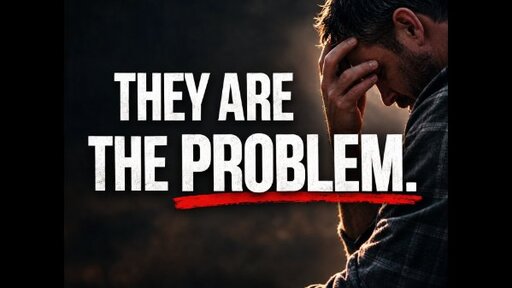
“They are the problem.”
Maybe you've thought:
If they would just do this,,,
If they would just give me this…
If they would just listen to me…
If they would just change…
Then everything would be fine.
Maybe you have had those thoughts with
your spouse.
with your kids.
Maybe with somebody at work.
Maybe it is happened with some one right here in this church.
If we are honest with ourselves - When conflict arises, we tend to look at the other person and blame them.
And if we can't blame the person, we'll blame the circumstances.
We'll blame the situation.
We'll find something—anything—to explain why we're upset.
Because we naturally want to believe the problem is out there.
But what if the problem isn't only out there?
What if there's something happening in here? (Point to your heart.)
Maybe - it's time for us to stop looking around - trying to fix everything we see around us.
And take a DEEP look at ourselves
Do some of those things OUT THERE need to be fixed?
Absolutely.
But before we start fixing everything out there, we need to let God deal with what's happening in here.
Jesus taught us this principle in Matthew7:3-5
Why do you see the speck that is in your brother’s eye, but do not notice the log that is in your own eye? Or how can you say to your brother, ‘Let me take the speck out of your eye,’ when there is the log in your own eye? You hypocrite, first take the log out of your own eye, and then you will see clearly to take the speck out of your brother’s eye.
And that's exactly where James is going to take us this morning.
“BUT PASTOR, THEY REALLY ARE THE PROBLEM.”
“BUT PASTOR, THEY REALLY ARE THE PROBLEM.”
Now I know somebody is thinking: In you mind you are saying - pastor, they really are the problem.”
And you know what?
They might be.
Maybe they really did hurt you.
Maybe they really did say something wrong.
Maybe they really did treat you unfairly.
Maybe they really did sin against you.
James isn't telling you to pretend their sin isn't real.
Instead James is telling us that before we start pointing fingers - before we start reacting - first we need to stop and ask:
What is their sin producing in you?
That question hit a little different.
and here is the thing - someone else's sin does not give me permission to sin.
They may be in the wrong.
But I'm still responsible for my response.
So instead of only asking:
What's wrong with them?
James makes helps us see that we need to slow down and ask - in this moment - in the midst of the conflict - What's happening in me?
And that's exactly what he does in verse 1
bur before we go there - first let’s take a look at the biggure picture
stand with me as we read
What causes quarrels and what causes fights among you? Is it not this, that your passions are at war within you? You desire and do not have, so you murder. You covet and cannot obtain, so you fight and quarrel. You do not have, because you do not ask. You ask and do not receive, because you ask wrongly, to spend it on your passions. You adulterous people! Do you not know that friendship with the world is enmity with God? Therefore whoever wishes to be a friend of the world makes himself an enemy of God. Or do you suppose it is to no purpose that the Scripture says, “He yearns jealously over the spirit that he has made to dwell in us”? But he gives more grace. Therefore it says, “God opposes the proud but gives grace to the humble.” Submit yourselves therefore to God. Resist the devil, and he will flee from you. Draw near to God, and he will draw near to you. Cleanse your hands, you sinners, and purify your hearts, you double-minded. Be wretched and mourn and weep. Let your laughter be turned to mourning and your joy to gloom. Humble yourselves before the Lord, and he will exalt you.
THE WAR WITHIN
THE WAR WITHIN
James starts of this section by asking a question
But first we need to look at what James doesn’t ask
He doesn't look at the situation and ask.
Who started it?
He does not pause to consider who is right and who is wrong?
Instead He asks:
“What causes quarrels and what causes fights among you?”
And then before giving us time to answer he moves right into the answer:
and the answer may catch you off guard - it may even upset you - becuase he takes taht finger you are using to blame everyone and every thing else and point it towards us
look at his answer - he says - Is it not this, that your passions are at war within you?”
The truth of the matter is that - The war around us often begins with a war within us.
James doesn't simply say:
“Stop fighting.
Instead He wants us to look beyond the fighting.
And realize this: sometimes— in fact I would say most of the time—what we're fighting about isn't really what the argument is about in the first place.
Think about it - maybe you are fighting
about money.
about a decision that was made.
Maybe the fight is over something that didn’t get done ir if it did it was not done to your liking
But underneath all that - the real issue is:
you just want to be respected
you just want to be right
you just want to be heard
or maybe -guys you just want to be the one in control of things and you just want everything to be done your way or the highway.
And when you don't get what you want, something happens inside you.
look at how James describes it:
he says
“You desire and do not have, so you murder. You covet and cannot obtain, so you fight and quarrel.”
James is exposing something we don't like to admit.
Our desires can become demands.
And when I don't get what I demand, I can begin treating people differently.
I get angry.
I get bitter.
I become resentful.
I start keeping score.
I start thinking: They owe me.
And suddenly there's a war around me because there's a war within me.
AND THEN JAMES TALKS ABOUT PRAYER
AND THEN JAMES TALKS ABOUT PRAYER
Now here's something interesting.
James moves from fighting to prayer.
Why?
Because they're connected.
He says:
“You do not have, because you do not ask.”
Sometimes we want something so badly that instead of taking it to God, we try to get it ourselves.
We manipulate.
We pressure.
We fight.
We demand.
But James says: the reason you do not have what you want is because you are not asking God for it
but he does not stop there - he goes even deeper:
James is answering a thought that has probably already crossed the minds of some of you. You’re thinking, ‘But Pastor, I have asked. I’ve prayed, and I still don’t have what I asked for.
And to that James says:
‘You ask and do not receive, because you ask wrongly, to spend it on your passions.’
Let’s break it all down -
Here is the big picture - Sometimes we don't pray.
And sometimes we pray—but in reality our prayers tend to be very selfish. Especially when it has to do with something that is causing us discomfort
Our prayers tend to be centered around things like this:
God, give me what I want.
God, make them change.
God, fix this situation.
James is not telling us not to pray for our needs or our desires instead he says we need to move beyond praying safe prayers and we need to go deeper
and ask ourselves one important question and that is:
Am I asking God to accomplish His will, or am I asking God to accomplish mine?
Because the same selfish desire that creates conflict with people can also corrupt our relationship with God.
Our Prayer life has a way of exposing out hearts - and examining what it is that we really want.
THE WAR IS BIGGER THAN THE ARGUMENT
THE WAR IS BIGGER THAN THE ARGUMENT
Are you felling convicted yet - if not changes are you have decided to tune me out
but James is not done - in fact he doubles down
in the next verse he uses some very strong language - he call them and us - adulterous people!
In other words - he is saying this is not just about a disagreement between two people.
It’s ultimately about our relationship with God.
Remember the conversation - last week about wisdom - James is reminding us that when we take our cue form the world and we live with that type of wisdom
we are buddying up with satan and his way of doing things and by doing so he is reminding us that
Friendship with the world is enmity with God.
In other words, when what the world wants becomes more important to me than what God wants, I've got a heart problem.
This does not necessarily mean that you are not saved but it does expose a heart issue
In other words:
When I say: I want my way.
But God's Word says: Here's My way.
And I choose my way anyway - that's not just stubbornness.
That's sin.
That's why James gets so serious.
Because underneath our fights may be a deeper issue:
and the real question is
Will I submit my desires to God, or will I demand that God submit to my desires?
and that is the real war - That's the war that is within.
BUT THEN COMES THE BEST NEWS
BUT THEN COMES THE BEST NEWS
And just when James has us looking honestly at our hearts, he says this in verse 6 says:
“But he gives more grace.”
Church, don't miss that.
James has just talked about:
Our selfish desires.
Our fighting.
Our coveting.
Our wrong motives.
Our friendship with the world.
Our pride.
And then: he says these words“
But he gives more grace.”
That is good news for all of us
God doesn't say:
“Fix yourself, and then come to Me.”
Instead He says: come to me and i will give you more grace
now look at what he says next
“God opposes the proud but gives grace to the humble.”
Notice the order.
Grace comes before the response.
First God gives grace.
Then James says:
Submit yourselves therefore to God. Resist the devil, and he will flee from you. Draw near to God, and he will draw near to you. Cleanse your hands, you sinners, and purify your hearts, you double-minded. Be wretched and mourn and weep. Let your laughter be turned to mourning and your joy to gloom. Humble yourselves before the Lord, and he will exalt you.
Do not speak evil against one another, brothers. The one who speaks against a brother or judges his brother, speaks evil against the law and judges the law. But if you judge the law, you are not a doer of the law but a judge. There is only one lawgiver and judge, he who is able to save and to destroy. But who are you to judge your neighbor?
Come now, you who say, “Today or tomorrow we will go into such and such a town and spend a year there and trade and make a profit”—
Church - We're not obeying what is being said so that God will finally love us.
We're responding because God has already shown us grace
SO WHAT DO WE DO?
SO WHAT DO WE DO?
So what do we do with all of this - we are not left guessing - James already gave us the answer
look Verse 7 again:
“Submit yourselves therefore to God.”
There it is.
If my problem is:
“I want my way.”
Then the answer is:
“God, I surrender my way to You.”
For way to long we have looked around - we have pointed fingers - we have tried to solve things on our own and it is time to stop!
It is time to surrender to the Lordship of Christ
we are about to move into our 4th quarter initiative - Where the focus is Glorifying God in all we do
but that can not and will not take palce if you are holding on to your prefrences - to your desires - to your way of doing things
That is why James says this next:
“Resist the devil, and he will flee from you.”
“Draw near to God, and he will draw near to you.”
“Cleanse your hands… and purify your hearts.”
“Humble yourselves before the Lord.”
James is calling for a complete change of direction.
Stop running after your desires and Turn toward God.
Stop defending your pride and Humble yourself.
Stop blaming everyone else and Let God examine your heart.
Stop trying to control everything and Submit yourself to God.
BUT HOW DO I DO THAT?
BUT HOW DO I DO THAT?
Now somebody may be thinking:
“Pastor, I know that's what I should do. But how?”
How do I surrender when I really want my way?
How do I forgive when I'm still angry?
How do I let go of bitterness?
How do I stop demanding that somebody else change?
How do I humble myself when everything in me wants to prove that I'm right?
Hoe stop blaming the world and everyone else for what is going on in the life of the church?
Here me when i say this - The answer isn't:
“Try harder.”
Because if trying harder could fix our hearts, we wouldn't need the gospel.
But the reality is We need Jesus.
IT was Jesus who perfectly submitted Himself to the Father.
In the garden He prayed:
“Not my will, but yours, be done.”
And He didn't just say it.
He lived it.
He went to the cross.
He obeyed when obedience meant suffering.
He obeyed when obedience meant rejection.
He obeyed when obedience meant death.
And He did it for sinners like us.
Jesus lived the obedient life we have failed to live.
He died the death our sin deserved.
And He rose again so that those who trust in Him could have new life.
So when James says:
“Submit yourselves therefore to God,”
he isn't telling us:
“Submit enough and maybe God will accept you.”
He's saying:
“Because God has given you grace in Christ, surrender yourself completely to Him.”
That's the difference.
Some of you have come to Jesus looking for a savior - but he is not Lord - I can I just say you can not have one with out the other
Then others of us - know him as Lord and Savior - but we are still trying to be in charge - and James is trying to help us see that is not working
THE WAR WITHIN
THE WAR WITHIN
Now let me be clear - coming to Christ doesn't mean you'll never struggle again.
James is writing to people who belong to God but they are struggling.
And there are not always living and walking like a Christian should
and He's telling them to keep submitting.
Keep resisting.
Keep drawing near.
Keep repenting.
Keep humbling themselves.
The Christian life isn't pretending the war isn't there.
It's learning, by God's grace, to keep surrendering ourselves to the Lord.
Because the gospel doesn't say:
Win the war yourself.
The gospel says:
Come to Christ.
And because Christ has saved us, His grace enables us to walk in obedience.
WHO'S DRIVING?
WHO'S DRIVING?
Think about a steering wheel. when you are in a car
The question isn't whether you have desires.
You do.
The question is:
Who's driving?
If my desires are driving, everything becomes about me.
I want this.
I deserve this.
I should get this.
They need to change.
But when God is in control, my prayer changes - my relationships change - my walk changes - I start producing fruit:
My mindset shifts to
“Lord, Your will be done.”
And That's surrender.
SO WHAT ABOUT THE PERSON WHO REALLY IS WRONG?
SO WHAT ABOUT THE PERSON WHO REALLY IS WRONG?
Let's go back to where we started.
Maybe they really are wrong.
Maybe they really did hurt you.
Maybe they really do need to change.
But here's what James is asking:
What is God asking you to do with what's happening in your heart?
You don't have to deny what happened.
You don't have to call wrong right.
You don't have to pretend you weren't hurt.
But you can refuse to let someone else's sin become the master of your heart.
You can bring it to God.
You can forgive.
You can speak truth.
You can set appropriate boundaries.
You can seek reconciliation when possible.
And you can say:
God, I can't control what they do, but I surrender to You what is happening in me.
That's where the war begins to change.
FROM HEARERS TO DOERS
FROM HEARERS TO DOERS
And that's why this fits our series so well.
We've called this series:
From Hearers to Doers.
It's not enough to hear:
“Humble yourselves before the Lord.”
Will we humble ourselves?
It's not enough to hear:
“Draw near to God.”
Will we draw near?
It's not enough to hear:
“Submit yourselves to God.”
Will we submit?
James isn't asking us simply to understand the problem.
He's calling us to respond.
We're not looking inside ourselves so we can fix ourselves.
We're looking honestly at our hearts so we'll recognize how much we need God's grace.
And James gives us that hope:
“He gives more grace.”
CONCLUSION
CONCLUSION
So maybe there's a war around you right now.
Maybe it's at home.
Maybe it's at work.
Maybe it's in a relationship.
Maybe it's even in the church.
And your first thought is:
They need to change.
And maybe they do.
But James asks you to look somewhere else.
What's happening in me?
What am I wanting?
What am I demanding?
What am I unwilling to surrender?
What desire has become more important to me than God's will?
Maybe you've spent so much time asking God to change someone else that you've never stopped to ask:
Lord, what do You want to change in me?
Maybe it's your anger.
Maybe it's your bitterness.
Maybe it's your desire to be right.
Maybe it's your need to control.
Maybe it's something you've been asking God to change in someone else when God is asking Him to change something in you.
And here's the hope of the gospel:
“He gives more grace.”
Not because we're good enough.
Not because we've cleaned ourselves up.
But because Jesus Christ has already done what we could never do.
He obeyed where we failed.
He died where we deserved to die.
He rose again so that we could have new life.
He gives more grace.
So church, maybe the question isn't:
How do I get them to change?
Maybe the question is:
Jesus, what do You want to change in me?
And that's where James wants us to begin.
The war within isn't won when you finally get your way.
And it isn't won simply by trying harder.
The war within begins to change when, by the grace of God, you surrender your way to Him.
So
Humble yourself.
Submit yourself to God.
Draw near to Him.
And trust His grace.
Because when you come to Jesus, you don't come because you've got it all together.
You come because you know you don't.
And the promise of James is:
“He gives more grace.”
Church
don't just hear it.
Do it.
Let's pray.
