ORDINARY MEN, EXTRAORDINARY CALLING (3)
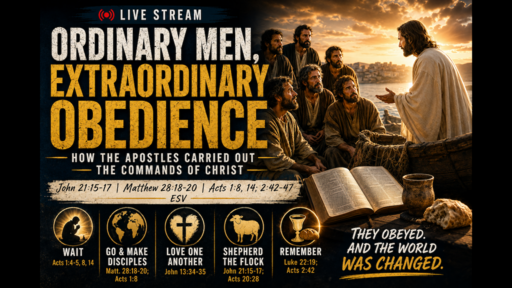
Ordinary Men, Extraordinary Calling • Sermon • Submitted • Presented • 46:29
0 ratings
· 2 viewsFiles
Notes
Transcript
“FROM FEAR TO FIRE: WHEN PETER FOUND HIS VOICE”
“FROM FEAR TO FIRE: WHEN PETER FOUND HIS VOICE”
Primary Text: Acts 2:1–41
Supporting Texts: Luke 22:31–32; John 21:15–19; Acts 1:4–8; Acts 4:8–13, 18–20
INTRODUCTION — THE SAME MAN, BUT NOT THE SAME PETER
INTRODUCTION — THE SAME MAN, BUT NOT THE SAME PETER
There is something almost shocking about comparing Luke 22 with Acts 2.
In Luke 22, Peter is standing beside a fire.
A servant girl looks at him and says:
“This man also was with him.”
And Peter answers:
“Woman, I do not know him.”
— Luke 22:57
Peter is intimidated by the accusation of a servant girl.
But only weeks later, Peter stands in Jerusalem before thousands of people and declares:
“Let all the house of Israel therefore know for certain that God has made him both Lord and Christ, this Jesus whom you crucified.”
— Acts 2:36
What happened to Peter?
The audience became larger.
The danger became greater.
The message became stronger.
Yet Peter became bolder.
The man who couldn't confess Jesus before a servant girl now proclaims Jesus before Jerusalem.
Something happened between the courtyard and Pentecost.
Peter had been:
called by Christ,
corrected by Christ,
broken by failure,
restored by grace,
commissioned to shepherd,
but there was still something Peter needed.
Power.
Jesus had already told him:
“You will receive power when the Holy Spirit has come upon you, and you will be my witnesses...”
— Acts 1:8
Peter had a calling.
Peter had knowledge.
Peter had experience.
Peter had walked with Jesus.
Peter had seen miracles.
Peter had even seen the resurrected Christ.
But Jesus still told Peter to wait.
Because experience with Jesus could not substitute for the power of the Spirit.
And that becomes the next chapter in Peter's transformation.
THE PROMISE BEFORE THE POWER
THE PROMISE BEFORE THE POWER
Acts 1:4–5
Jesus commanded the disciples:
“not to depart from Jerusalem, but to wait for the promise of the Father... ‘you will be baptized with the Holy Spirit not many days from now.’”
Think about Peter's situation.
Jesus had already told him:
“Feed my sheep.”
Peter had a commission.
Yet Jesus essentially says:
Don't start yet.
Why?
Because calling without empowerment produces frustration.
Jesus did not merely give His apostles instructions and send them into the world relying upon personality, intelligence, charisma, or human courage.
He promised supernatural power.
Acts 1:8 says:
“But you will receive power when the Holy Spirit has come upon you...”
The Greek word translated power is:
Dynamis — δύναμις
Dynamis — δύναμις
Strong's G1411.
It speaks of power, ability, might, strength, miraculous capability.
Our English word dynamite comes from the same Greek root.
Jesus was telling ordinary men:
You are going to receive an ability that does not originate in you.
That distinction is critical.
Peter did not need a personality adjustment.
Peter needed divine empowerment.
PETER LEARNED TO WAIT BEFORE HE LEARNED TO LEAD
PETER LEARNED TO WAIT BEFORE HE LEARNED TO LEAD
Acts 1:12–14
After Jesus ascended, Peter and the others returned to Jerusalem.
Acts 1:14 says:
“All these with one accord were devoting themselves to prayer...”
Peter does something here that the earlier Peter struggled to do.
He waits.
Remember Peter's personality.
Peter was the man who:
spoke before thinking,
jumped out of boats,
swung swords,
interrupted Jesus,
wanted to build three tabernacles on the mountain.
Peter was a man of action.
Yet now Peter is sitting in an upper room praying.
That itself demonstrates growth.
Sometimes spiritual maturity isn't demonstrated by what you do.
Sometimes it is demonstrated by your willingness to wait until God says move.
There are seasons when faith says:
GO.
But there are also seasons when faith says:
WAIT.
Peter had finally learned:
Movement is not necessarily obedience.
You can be moving and still be outside God's timing.
THEN CAME PENTECOST
THEN CAME PENTECOST
Acts 2:1–4
“When the day of Pentecost arrived, they were all together in one place.”
Suddenly there came a sound from heaven like a rushing mighty wind.
Tongues like fire appeared.
And Acts 2:4 says:
“And they were all filled with the Holy Spirit and began to speak in other tongues as the Spirit gave them utterance.”
Peter is among them.
The fisherman receives the promise.
The man who had been unstable is now filled with the Spirit.
And immediately we see the difference.
Peter doesn't hide.
Peter stands.
“PETER, STANDING UP”
“PETER, STANDING UP”
Acts 2:14
This may be one of the most important descriptions of Peter in Scripture:
“But Peter, standing with the eleven, lifted up his voice...”
Don't rush past those words.
PETER STOOD UP.
PETER STOOD UP.
The last time Jerusalem saw Peter publicly associated with Jesus, Peter was trying to disappear into the shadows.
Now he stands in front of everybody.
There is a sermon hiding in those three words:
PETER STOOD UP.
PETER STOOD UP.
The man who fell stood up.
The man who failed stood up.
The man who denied Jesus stood up.
The man who wept bitterly stood up.
The man who thought his story might be finished...
stood up.
Restoration isn't merely God forgiving your past.
Restoration is God giving you the courage to stand again.
THE HOLY SPIRIT DID NOT CREATE A DIFFERENT PETER
THE HOLY SPIRIT DID NOT CREATE A DIFFERENT PETER
This is important.
Pentecost did not erase Peter's personality.
Peter was still Peter.
He was still bold.
He was still direct.
He was still intense.
He was still willing to speak when everyone else was quiet.
But now those traits were surrendered to the Spirit.
Before Pentecost, Peter's boldness sometimes produced problems.
After Pentecost, Peter's boldness produced proclamation.
Before:
Peter's mouth got him into trouble.
After:
God used Peter's mouth to preach the Gospel.
God didn't destroy Peter's personality.
He sanctified it for His purpose.
That is often how calling works.
God doesn't necessarily remove the traits that make you who you are.
He brings them under the government of the Holy Spirit.
The stubborn man becomes steadfast.
The outspoken man becomes a preacher.
The passionate man becomes an evangelist.
The natural leader becomes a shepherd.
God redeems the personality and redirects it toward His purpose.
PETER PREACHES THE SCRIPTURES
PETER PREACHES THE SCRIPTURES
Another major transformation occurs in Acts 2.
Peter doesn't merely give an emotional testimony.
He opens the Scriptures.
His sermon is saturated with the Old Testament.
He quotes:
Joel 2:28–32
“I will pour out my Spirit on all flesh...”
Then:
Psalm 16:8–11
to explain the resurrection.
Then:
Psalm 110:1
to proclaim the exaltation of Christ.
The fisherman has become a biblical expositor.
Remember Acts 4:13 later describes Peter and John as:
“uneducated, common men.”
Yet Peter stands before Jerusalem interpreting prophecy, Psalms, resurrection theology, Christology, repentance, baptism, and the promise of the Holy Spirit.
How?
Because Peter had been with Jesus.
That was the apostles' education.
Three years walking with the Word made flesh had transformed how Peter understood the written Word.
PETER PREACHES JESUS
PETER PREACHES JESUS
Notice what Peter's sermon is really about.
Not Peter.
Not Pentecost.
Not tongues.
Not miracles.
Jesus.
Acts 2:22:
“Jesus of Nazareth...”
Acts 2:23:
“this Jesus... you crucified and killed...”
Acts 2:24:
“God raised him up...”
Acts 2:32:
“This Jesus God raised up...”
Acts 2:36:
“God has made him both Lord and Christ, this Jesus whom you crucified.”
Peter's message has one unmistakable center:
JESUS CHRIST.
JESUS CHRIST.
The Spirit-filled preacher doesn't merely preach about spiritual experiences.
The Holy Spirit magnifies Christ.
Peter understood something:
Pentecost was not the destination. Pentecost empowered the church to proclaim Jesus.
PETER PREACHES WHAT HE ONCE COULD NOT SAY
PETER PREACHES WHAT HE ONCE COULD NOT SAY
Acts 2:36:
“Let all the house of Israel therefore know for certain...”
Notice Peter's certainty.
Remember the courtyard:
“I do not know him.”
Now:
“KNOW FOR CERTAIN.”
The man who once denied knowing Jesus is now telling everybody else that they need to know who Jesus is.
There is something beautiful about the grace of God here.
God takes the location of Peter's greatest weakness and turns it into the arena of his greatest ministry.
Peter failed with his mouth.
God restored Peter's mouth.
Peter denied Jesus publicly.
God used Peter to proclaim Jesus publicly.
Your greatest failure does not necessarily identify your future.
Sometimes the place where you fell becomes the place where God demonstrates His transforming power.
THE MESSAGE CUT THEM TO THE HEART
THE MESSAGE CUT THEM TO THE HEART
Acts 2:37
“Now when they heard this they were cut to the heart...”
The Greek word is:
Katanýssō — κατανύσσω
Katanýssō — κατανύσσω
Strong's G2660.
It carries the idea of being pierced, stabbed, or deeply penetrated.
Peter's preaching did not merely inform them.
It pierced them.
And they asked:
“Brothers, what shall we do?”
This is what Spirit-anointed preaching produces.
Not merely:
“That was interesting.”
Not merely:
“That was a good sermon.”
But:
“WHAT SHALL WE DO?”
“WHAT SHALL WE DO?”
True preaching calls for response.
PETER GIVES THEM AN ANSWER
PETER GIVES THEM AN ANSWER
Acts 2:38
Peter says:
“Repent and be baptized every one of you in the name of Jesus Christ for the forgiveness of your sins, and you will receive the gift of the Holy Spirit.”
Peter doesn't tell them merely to admire Jesus.
He calls them to respond to Jesus.
Repent.
Be baptized.
Receive the Holy Spirit.
And then Peter says something that extends beyond the crowd standing in Jerusalem:
Acts 2:39
“For the promise is for you and for your children and for all who are far off, everyone whom the Lord our God calls to himself.”
The same Peter who received the promise is now telling others:
The promise is for you.
That's discipleship.
God gives something to you, and then God uses you to lead somebody else into it.
THREE THOUSAND RESPOND
THREE THOUSAND RESPOND
Acts 2:41
“So those who received his word were baptized, and there were added that day about three thousand souls.”
Think about the contrast.
A servant girl caused Peter to retreat.
Now three thousand people respond to Peter's preaching.
But Peter would have understood better than anyone:
This wasn't Peter's power.
This was exactly what Jesus promised.
“You will receive power when the Holy Spirit has come upon you, and you will be my witnesses.”
Acts 2 is Acts 1:8 becoming reality.
BUT THE REAL TEST COMES AFTER PENTECOST
BUT THE REAL TEST COMES AFTER PENTECOST
Anybody can be bold in a revival service.
What happens when opposition comes?
Acts 3 records the healing of the lame man at the Beautiful Gate.
That miracle creates another opportunity for Peter to preach Jesus.
Then Peter and John are arrested.
Now Peter is standing before powerful religious authorities.
Acts 4:7:
“By what power or by what name did you do this?”
Peter is standing before the very establishment involved in condemning Jesus.
This is much more dangerous than the servant girl.
But Acts 4:8 says:
“Then Peter, filled with the Holy Spirit, said to them...”
There it is again.
The difference between the courtyard and the council chamber is not merely that Peter decided to be braver.
Peter was filled with the Holy Spirit.
“THERE IS SALVATION IN NO ONE ELSE”
“THERE IS SALVATION IN NO ONE ELSE”
Acts 4:12
Peter declares:
“And there is salvation in no one else, for there is no other name under heaven given among men by which we must be saved.”
Peter isn't whispering this privately among believers.
He is saying it to the religious rulers.
The same man who once said:
“I don't know Him”
now declares:
“There is salvation in no one else.”
That's transformation.
THEY RECOGNIZED THAT THEY HAD BEEN WITH JESUS
THEY RECOGNIZED THAT THEY HAD BEEN WITH JESUS
Acts 4:13
This verse gives the entire series its heartbeat:
“Now when they saw the boldness of Peter and John, and perceived that they were uneducated, common men, they were astonished. And they recognized that they had been with Jesus.”
The word translated boldness is:
Parrēsia — παρρησία
Parrēsia — παρρησία
Strong's G3954.
It means:
freedom of speech, confidence, openness, courage, boldness.
They couldn't explain Peter.
He wasn't formally trained.
He didn't have their credentials.
He didn't belong to their religious establishment.
Yet he spoke with authority.
Finally they reached the only explanation available:
“They had been with Jesus.”
That is perhaps the greatest compliment anyone could ever give a believer.
Not:
“They're talented.”
“They're educated.”
“They're impressive.”
“They're charismatic.”
But:
“THAT PERSON HAS BEEN WITH JESUS.”
“THAT PERSON HAS BEEN WITH JESUS.”
“WE CANNOT BUT SPEAK”
The authorities command Peter and John:
Acts 4:18
“not to speak or teach at all in the name of Jesus.”
This is Peter's moment.
Once before, pressure caused Peter to become silent about Jesus.
What will he do now?
Peter answers:
Acts 4:19–20
“Whether it is right in the sight of God to listen to you rather than to God, you must judge, for we cannot but speak of what we have seen and heard.”
That's the transformed Peter.
Before:
“I don't know Him.”
Now:
“I cannot stop talking about Him.”
WHAT CHANGED PETER?
WHAT CHANGED PETER?
Let's put the journey together.
Peter encountered Jesus.
Peter followed Jesus.
Peter failed Jesus.
Peter was restored by Jesus.
Peter received the Holy Spirit.
Peter became a witness for Jesus.
There is a progression here:
CALLING → FAILURE → RESTORATION → EMPOWERMENT → WITNESS
And this is why Peter's story is so encouraging.
Jesus didn't call Peter because Peter was already a rock.
Jesus called Peter knowing exactly how unstable he was.
When Jesus first met Simon, He said:
“You shall be called Cephas.”
Jesus named Peter according to what grace would make him rather than what weakness presently made him.
And by Acts 4, we are beginning to see the rock emerge.
APPLICATION — WHICH PETER ARE WE?
APPLICATION — WHICH PETER ARE WE?
There are several versions of Peter in this story.
There is the Peter in the boat:
“At your word I will let down the nets.”
That's obedient Peter.
There is Peter in the courtyard:
“I do not know him.”
That's fearful Peter.
There is Peter beside the charcoal fire:
“Lord, you know everything; you know that I love you.”
That's restored Peter.
There is Peter in the upper room:
waiting and praying.
That's dependent Peter.
There is Peter at Pentecost:
“This Jesus...”
That's empowered Peter.
And there is Peter before the council:
“We cannot but speak...”
That's bold Peter.
The question is not whether Peter had weaknesses.
He clearly did.
The question is:
WHAT HAPPENS WHEN AN ORDINARY MAN COMPLETELY SURRENDERS HIMSELF TO AN EXTRAORDINARY GOD?
WHAT HAPPENS WHEN AN ORDINARY MAN COMPLETELY SURRENDERS HIMSELF TO AN EXTRAORDINARY GOD?
Acts gives us the answer.
A WARNING: PETER'S STORY ISN'T FINISHED
A WARNING: PETER'S STORY ISN'T FINISHED
We shouldn't make Peter unrealistically perfect after Pentecost.
The Holy Spirit transformed Peter, but Peter still had growing to do.
Later, Paul tells us in Galatians 2:11–14 that Peter withdrew from eating with Gentile believers because he feared the circumcision party.
Notice what reappears.
Fear of people.
The old weakness wasn't completely gone.
That teaches us something important:
Being filled with the Spirit does not mean we never need correction again.
Peter could preach Pentecost and still need Paul to confront him later.
Spiritual maturity is not the absence of weakness.
It is learning to continually surrender our weakness to Christ.
And even Peter—the great apostolic preacher—was still being shaped.
PROPHETIC INSIGHT / CALL TO ACTION
PROPHETIC INSIGHT / CALL TO ACTION
You may be somebody sitting in the church tonight and feel more like Luke 22 Peter than Acts 2 Peter.
You remember where you failed.
You remember what you said.
You remember where fear conquered you.
And perhaps you've allowed that moment to define you.
But Peter's story declares:
YOUR COURTYARD DOES NOT HAVE TO BE YOUR FINAL CHAPTER.
YOUR COURTYARD DOES NOT HAVE TO BE YOUR FINAL CHAPTER.
There is an upper room after the courtyard.
There is Pentecost after failure.
There is boldness after fear.
There is ministry after restoration.
There is purpose after brokenness.
Peter's failure was real.
But Jesus' calling was greater than Peter's failure.
And when the Spirit of God filled this ordinary fisherman, the man who couldn't speak to a servant girl stood before Jerusalem and preached Christ.
Three thousand souls were added.
The religious authorities threatened him.
And Peter essentially said:
I couldn't admit that I knew Him before.
Now I cannot stop talking about Him.
That's what Jesus can do with an ordinary man who has been broken, restored, and filled with His Spirit.
CLOSING CHALLENGE
CLOSING CHALLENGE
Acts 4:13 brings us back to the theme of this entire series:
“They recognized that they had been with Jesus.”
When people encounter us—
our families,
our coworkers,
our neighbors,
our church,
even those who oppose us—
what do they recognize?
Do they recognize our opinions?
Our politics?
Our personality?
Our denomination?
Our education?
Or is there something about our words, our character, our courage, and our love that makes them say:
“THEY HAVE BEEN WITH JESUS.”
“THEY HAVE BEEN WITH JESUS.”
Peter was ordinary.
The calling was extraordinary.
The power was not Peter's.
It came from the Holy Spirit.
And the same Christ who called Peter still calls ordinary people today.
KEY TAKEAWAY
KEY TAKEAWAY
Peter's greatest transformation was not from fisherman to preacher. It was from self-confidence to Spirit-dependence.
The Peter who said:
“Even if I must die with you, I will not deny you”
failed.
But the Peter who was:
“filled with the Holy Spirit”
stood.
God did not need a stronger Peter.
PETER NEEDED THE SPIRIT.
PETER NEEDED THE SPIRIT.
And so do we.
NEXT SESSION
ANDREW — “THE MAN WHO KEPT BRINGING PEOPLE TO JESUS”
ANDREW — “THE MAN WHO KEPT BRINGING PEOPLE TO JESUS”
Primary Text: John 1:35–42; John 6:5–13; John 12:20–22
